Published: 09 October 2026. The English Chronicle Desk. The English Chronicle Online
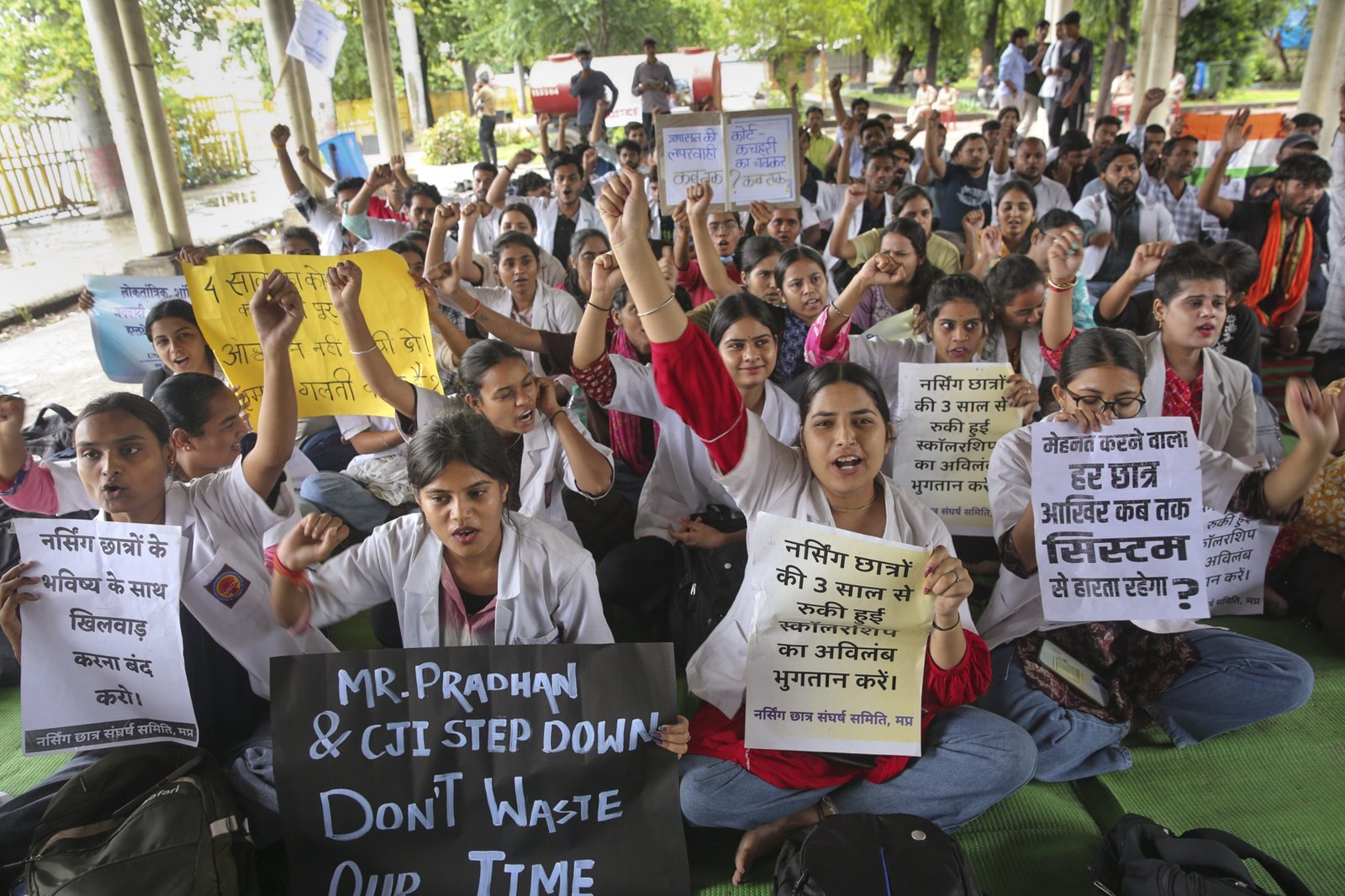
India’s emerging youth-led political movement, the Cockroach Janta Party (CJP), has accused authorities of carrying out widespread detentions of its supporters and affiliated activists ahead of a major anti-government demonstration scheduled for Saturday in New Delhi. The allegations have intensified an already heated political dispute over a nationwide revision of voter lists, a process that opposition parties say threatens democratic participation and could disenfranchise millions of eligible voters.
Thousands of demonstrators are expected to gather at Jantar Mantar, the designated protest site in the Indian capital, on 10 October. The planned rally forms part of a growing campaign demanding the resignation of Chief Election Commissioner Gyanesh Kumar over the controversial revision of electoral rolls. Opposition political parties, student organisations and the CJP youth movement have organised repeated demonstrations in recent weeks, arguing that the integrity of the country’s electoral system is at stake.

Ashutosh Ranka, a spokesperson for the CJP, said on Thursday that at least 10,000 people associated with the movement, student groups, grassroots organisations and political parties had been detained across India. The allegation, shared publicly on social media, raised concerns among activists about whether authorities were attempting to disrupt the planned demonstration before it could take place.
Police authorities had not immediately responded to requests for comment regarding the reported detentions. Videos circulating on social media appeared to show activists being taken away in vans, although the circumstances surrounding individual incidents and the overall number of people detained had not been independently established.
The CJP also claimed that a group of students from Pune, a major city in western India, had been detained while travelling to Delhi to participate in Saturday’s protest. According to the movement, the students were placed on a bus and taken to an undisclosed location. The allegation added to fears among organisers that people travelling from outside the capital could face obstacles in reaching the demonstration.
The reported detentions come against the backdrop of growing controversy surrounding India’s special intensive revision, or SIR, of electoral rolls. The nationwide exercise is intended to review voter registrations and remove duplicate, outdated or otherwise ineligible entries. However, opposition parties have questioned the process, arguing that the removal of names on such a large scale could undermine voting rights and disproportionately affect communities that support political parties opposed to Prime Minister Narendra Modi’s government.
More than 130 million names have reportedly been removed from voter lists during the revision process so far. The number is larger than the populations of several major countries, including Japan and Mexico, underscoring the enormous scale of the exercise. Millions of people have appealed against the deletions, raising questions about how quickly disputed cases can be reviewed and whether eligible citizens will be able to restore their registrations before future elections.
For opposition leaders and campaigners, the central concern is whether the revision is being conducted transparently and whether every eligible voter has a fair opportunity to participate in the democratic process. They argue that removing names without effective notification, accessible appeals and adequate verification could prevent citizens from exercising one of their most fundamental political rights.
The government and the Election Commission reject allegations that the process is politically motivated. They maintain that the revision is intended to identify duplicate registrations and remove people who are no longer eligible to vote. Authorities have not accepted the opposition’s claims that the exercise systematically favours the ruling Bharatiya Janata Party, or BJP.
The dispute has nevertheless developed into a major political confrontation, bringing questions about electoral administration, civil liberties and public trust to the forefront of Indian politics. The opposition’s demands for Kumar’s resignation reflect its wider concern that the institution responsible for supervising elections must be seen as independent, impartial and accountable.
The CJP has become a prominent participant in the protests despite beginning as a satirical online movement. It emerged in May as a youth campaign built around the deliberately provocative “Cockroach” identity, which gained attention through internet culture and political humour. Since then, the group has increasingly moved beyond online activism, organising street demonstrations and attracting young supporters frustrated with corruption, public institutions and political accountability.
Its growing visibility presents a fresh challenge to Modi’s government during his third term as prime minister. The movement has already demonstrated its capacity to mobilise young people around national issues. Earlier demonstrations associated with the CJP helped build pressure that culminated in the resignation of India’s education minister following a separate controversy involving examination paper leaks.
That earlier campaign gave the movement an example of how public pressure can influence political outcomes. The current voter-list dispute, however, involves a more fundamental question: whether citizens can be confident that their names will remain on electoral rolls and that they will be allowed to vote when elections take place.
In Bengaluru, the country’s technology hub, hundreds of CJP supporters gathered on Thursday to protest against the voter-list revision and call for the protection of voting rights. Demonstrators carried placards reading “Every name counts, Every vote matters” and “Stop the Murder of Democracy”. Their slogans reflected a broader concern that administrative decisions affecting electoral registration could have consequences far beyond individual paperwork or routine government procedures.
Khushi Shrivastava, a 22-year-old architecture student who attended the demonstration, said the right to vote was among the most basic elements of democracy. She argued that people who wanted to participate in elections and cared about India’s future should not be denied that opportunity. Her comments highlighted the role of younger citizens in the campaign and the growing concern among students that decisions made by electoral authorities could shape their political future.
The protests have also drawn in senior opposition figures, including leaders of the Congress party. On Wednesday, Congress accused police of using excessive force while briefly detaining party leader Rahul Gandhi, his sister Priyanka Vadra and other lawmakers as they attempted to reach the Jantar Mantar protest site in New Delhi.
The incident added another layer to the confrontation between opposition parties and the authorities. Congress said the police action was unjustified, while Delhi Police rejected the criticism, claiming the allegations were intended to defame the force. The competing accounts illustrate the deepening mistrust between opposition groups and law enforcement as demonstrations over the electoral-roll controversy continue.
The BJP has also pushed back against the opposition’s accusations. Party spokesperson Gaurav Bhatia described the claims as irresponsible and anarchic, arguing that they lacked evidence. Speaking to reporters on Thursday, he rejected suggestions that the government or its political allies were manipulating the voter-list revision to gain an electoral advantage.
The disagreement has placed the authorities under pressure to provide clear explanations about both the revision process and the reported detentions. For the government, the central argument remains that electoral rolls must be accurate and free from duplicate or ineligible entries. For protesters, the priority is ensuring that legitimate voters are not excluded and that political dissent is not restricted through police action.
In the capital, police have erected barricades around the area ahead of Saturday’s planned rally. The security arrangements reflect officials’ preparations for a potentially large gathering, although they have also heightened concerns among activists about access to the protest site and the treatment of people seeking to demonstrate peacefully.
The scale of Saturday’s turnout could offer an indication of how far the campaign has spread beyond established opposition parties and into India’s younger population. The participation of students and grassroots organisations suggests that the controversy is no longer confined to political leaders or election administrators. It has become a public debate about representation, accountability and the practical ability of citizens to exercise their rights.

Much will depend on whether the authorities can address concerns about deleted voter registrations, provide an accessible appeals process and clarify the circumstances surrounding the alleged detentions. Independent verification of the reported figure of 10,000 detainees will also be important in determining the true scale of the operation.
As India prepares for the demonstration, the dispute presents a significant test for its democratic institutions. Accurate voter lists are essential to credible elections, but public confidence also depends on transparency, fair procedures and the protection of eligible voters. With thousands expected in Delhi and protests continuing in other cities, the government faces growing pressure to demonstrate that the revision process is being carried out fairly and that citizens can express their objections without fear of arbitrary detention.
Related News:
 Five Years of Taliban Rule Leave Afghanistan in Crisis
 Nepal Flood Survivors Face Unimaginable Loss
 Nepal Tunnel Rescue Offers Hope Amid Flood Devastation
 Nepal PM calls deadly flood a global climate warning
 Israeli Strike in Southern Lebanon Kills Seven
 Is America Ready for an AOC Presidential Run?
 Nepal-Tibet Flood Death Toll Rises as 2,478 Remain Missing
 Yemen War Displaces 125,000 as Fighting Intensifies
 Lib Dems Prepare for Election Amid Reform Challenge
 Elif Eralp Emerges as Berlin’s Next Political Force
 Trump Asked Xi About Buying US Weapons
 South Korea-Ukraine Row Erupts Over North Korean POWs
 Drumcree Talks Falter as Legal Challenge Deepens
 UK-France Returns Deal Faces Expiry as Talks Stall
 Green Party faces dispute over Zionism motion
 Pilot Recalls Fight to Save Flydubai Passengers
 Germany Pledges €1bn Military Aid to Ukraine
 Latin America women fear rollback of rights
 Pacific Climate Summit Draws Limited Global Leaders
 Delhi Freezes Promotion of Police Officer After Allegations
 Sri Lanka Ex-First Lady Arrested Over Donation Probe
 Israel Promotes Film Challenging Controversial Gaza Documentary
 Iran Crisis Tests Trump’s Global Leadership
 Southeast Asia Turns to Russia Amid Energy Crisis
 Cartel crackdown raises fears of fresh violence
 China Fireworks Factory Blast Kills 21 in Hunan
 US ‘Narco Boat’ Strikes Draw Global Outcry
 France Faces Record Presidential Crowded Race Amid Far-Right Surge
 US Awaits Iran Reply on New Ceasefire Proposal
 Immigration Judges Fear Pressure in Trump Era
 Hormuz Talks Near Critical Stage
 Maldives Cave Diving Tragedy Raises Safety Alarm
 Discontent grows around Putin amid war strain
 Farage and Reform UK Reshape British Politics
 Starmer Leadership Under Pressure After Setbacks
 Millions Gather for Khamenei’s Six-Day State Funeral
 Le Pen’s Popularity Holds Despite Conviction
 Houthis Strike Saudi Arabia as Middle East Tensions Rise
 Ghent Professors Questioned Cofnas Appointment
 RAF Barnham Protests Fuel Tensions in Norfolk Town
 Ukraine Villagers Demand Answers After Deadly Arms Depot Strike
 Trump Calls Iran War ‘Small Potatoes’ Despite US Deaths
 Europe’s democracies face a growing far-right threat
 Saudi Arabia Shuts Oil Pipeline After Drone Attack
 Israel Accused of Undermining Palestinian Life
 Amnesty Finds Coordinated Abuses in Iran Protest Crackdown
 Turkey LGBTQ Crackdown Expands With New Arrests
 US Networks Suspend Trump White House Pool Coverage
 Democrat Says ICE Restricted Detention Camp Oversight
 Japan PM Backs International Criminal Court
 King Refers Jamaica Slavery Petition to Privy Council
 UK Plans New Centre to Counter Information Warfare
 Iran Rejects Claims of Shift in US Talks
 Greece Pushes for Parthenon Marbles Reunification
 Ukraine and Russia Escalate Long-Range Drone War
 Xi urges Trump to avoid US-China military conflict
 Lula accuses Trump of seeking control over Brazil
 Saudi intercepts Houthi missiles as oil fears grow
 Republican Senator Questions Trump Ad Spending
 Free Speech Emerges as Key UK Election Issue
 Madrid Tent Camp Grows as Spain Housing Crisis Deepens
 South Korea demands apology over DMZ mine blast
 Economic growth and political strain reshape Benin
 French Student Protests Escalate Into Violent Clashes
 Burnham Opens Door to Possible UK Return to EU
 New Maps Reveal Gaza’s Vast Destruction
 Badenoch Raises Prospect of 2027 UK Election
 French School Protests Escalate as 400 Schools Close
 North Korea Fires Missile Amid DMZ Tensions
 Families Await USS Abraham Lincoln Homecoming
 Bosnia’s Young People Look Beyond Election Hope
 Former German Intelligence Chief Arrested Over Espionage
 Israel Marks Three Years Since October 7 Attack
 South Korea Probes Fuel Shipments to Russia
 Luton Residents Reject Claims of ‘No-Go Zones’
 Trump Says He Deserves Nobel Peace Prize
 USS Lincoln Ends Record 265-Day Deployment
 Japan’s Princess Aiko Fuels Debate Over Royal Succession
 Houthi Missile Claim Sparks Riyadh Airport Disruption
 Labour Wins Key London By-election as Greens Fall Short