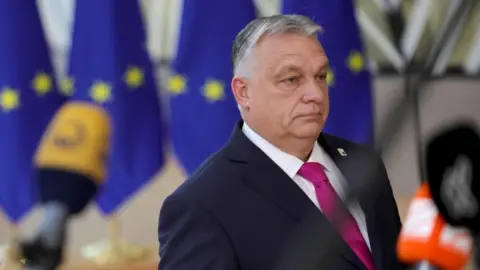
Hungary is preparing to expose one of the most sensitive chapters of its modern history, as the country’s new government moves to make the names of tens of thousands of communist-era state informants publicly accessible. The decision is expected to reveal the identities of people who secretly collaborated with the former communist security services between 1945 and 1989, providing a clearer picture of how the state monitored citizens, suppressed political opposition and maintained control over society for more than four decades.
The announcement represents a significant development in Hungary’s efforts to confront its authoritarian past. Under the new initiative, the government led by Prime Minister Péter Magyar will introduce a searchable online database containing information from the former state-security archives. The publication of the records is intended to improve transparency, address historical injustices and help rebuild public confidence in democratic institutions.
However, the decision is also expected to create difficult personal and social consequences. The documents could expose individuals who secretly reported on neighbours, colleagues, friends and even members of their own families. For many Hungarian households, the release may reveal previously unknown connections between relatives and the communist security apparatus, raising painful questions about loyalty, coercion, responsibility and survival under an authoritarian system.

Between 1945 and 1989, Hungary operated an extensive network of informants who provided information to the country’s state-security services. These individuals helped authorities monitor everyday activities, identify potential political opponents and suppress expressions of dissent. Their reports could influence the lives of ordinary citizens, particularly those suspected of opposing the communist government or maintaining connections with people considered politically undesirable.
Not everyone joined the network voluntarily. Some individuals were blackmailed, threatened or pressured into providing information, while others were recruited through promises of financial advantages, professional opportunities or other personal benefits. The circumstances surrounding individual cases varied considerably, making it difficult to establish the motivations and responsibilities of every person named in the surviving documents.
For decades, the identities of many informants remained hidden. The files were preserved in the basement of the Historical Archives of the Hungarian State Security Services in Budapest, but public access was restricted. Researchers and relatives of victims could examine certain materials under specific conditions, while the wider population had limited opportunities to investigate the historical records.
The issue remained politically sensitive throughout Hungary’s transition from communism to democracy. Although partial lists and individual allegations occasionally emerged, there was no comprehensive public disclosure of the informant network. Several politicians, artists and other prominent figures were named in unofficial lists published over the years, sometimes triggering major political controversies. Those accused frequently denied involvement, while the absence of complete records made it difficult to establish the full circumstances.
Prime Minister Péter Magyar promised during his campaign ahead of the April parliamentary elections that his government would make the state-security files accessible. After taking office, his administration moved to fulfil that commitment. In September, parliament passed legislation creating the legal framework necessary for the publication of the documents.
Public support for greater transparency appears substantial. According to opinion polls cited in the reporting, more than two-thirds of Hungarians supported making the records available. The original plan was to release the information around the anniversary of the 1956 Hungarian uprising against Soviet influence, but the government subsequently postponed the publication until 4 November.
Zoltán Tarr, the minister responsible for social relations and culture, defended the initiative by arguing that a democratic society has the right to understand its own history. His position reflects the government’s broader argument that transparency is necessary to address the consequences of decades of political repression.
István Papp, a historian and head of the academic department at the archives, described the initiative as a major step towards opening historical records that had remained only partially accessible. He supports the publication from a professional perspective but also recognises the emotional difficulties that individuals may experience when discovering previously concealed family histories.
Historians estimate that between 50,000 and 60,000 people are mentioned in the surviving informant records. Of those, approximately 10% are believed to remain alive today. The disclosure could therefore affect thousands of individuals and their families, including people who may have had no knowledge of their relatives’ activities during the communist period.
The Hungarian collection is extensive, but it is not complete. According to Papp, the documents would stretch approximately three miles if placed side by side. Nevertheless, the surviving archive is considerably smaller than comparable collections maintained by the former communist security services in countries such as Poland and Romania.
A significant amount of historical material was destroyed during the 1956 uprising, while additional records disappeared during Hungary’s political transition in 1989. The relatively peaceful nature of that transition gave some former officials time to remove or destroy documents that could have exposed their activities.
Consequently, researchers have warned that the published records will not provide a complete account of the informant network. Some names appear in detailed files, while others are mentioned only in background checks or individual reports. Information about recruitment methods, personal motivations and the actual extent of cooperation may remain unavailable.
Of the approximately 60,000 people mentioned in the records, detailed documentation exists for only around 9,000. These more comprehensive files are expected to be released in February after the necessary legal and privacy reviews.
The government has also indicated that sensitive personal information will be removed before publication. Details concerning health conditions, addictions and sexuality, as well as information that could expose victims, will be redacted in accordance with privacy legislation. The intention is to make historical accountability possible without unnecessarily violating the privacy and dignity of individuals.
Hungary’s decision also highlights differences in how former communist countries have dealt with their secret-police histories. Germany began opening the files of the East German Stasi in 1992, shortly after reunification. The Czech Republic made its informant records publicly accessible in 2003, while Latvia published files relating to former informants in 2018.
Some Hungarian survivors believe their country should have followed the German example much earlier. Miklós Kiss, a survivor of a Hungarian forced labour camp and president of an association representing victims, expressed regret that the records had remained inaccessible for so long.
He believes earlier publication could have allowed Hungarian society to confront the issue decades ago. However, he also recognises the difficult consequences of revealing the identities of people who cooperated with the security services. The discovery that informants existed within almost every community could create tensions among families and neighbours long after the political system that produced the network disappeared.
The personal consequences are illustrated by the experience of Alexander Faludy, a freelance journalist and Anglican priest who examined documents relating to his family almost two decades ago. His grandfather, György Faludy, spent more than three years in a Hungarian forced labour camp after being accused of offences that were fabricated. Following his exile, he wrote the book My Happy Days in Hell, describing his experiences.
One particular report in the archive involved a Hungarian woman living in London who had befriended Faludy’s grandmother while she was dying of cancer. The discovery initially made him angry, as he believed the woman had betrayed a vulnerable member of his family.
However, further examination of the informant’s file revealed that the security services also possessed information about her elderly parents and other relatives living in Hungary. Faludy began to consider whether the woman had been pressured into cooperation through threats against her family.
The discovery changed his perspective. Although his family had suffered because of the activities of the security services, he recognised that people who remained in Hungary under an oppressive system might have faced circumstances that were difficult to judge from a distance.
The debate also extends to religious communities. Religious figures were among the targets of communist-era surveillance, and some were reportedly pressured into providing information about members of their congregations. Estimates suggest that between 7% and 10% of religious figures may have cooperated with the authorities.
In July, the independent religious publication Szemlélek encouraged former informants to come forward and explain their experiences. However, no one had publicly volunteered to share their story by the time of the report.
The publication’s editor, Szilárd Szőnyi, suggested that many former agents might feel their experiences were too complicated or painful to discuss. Others may believe there is little to gain from revisiting a period that they would rather leave behind.
Historians also hope the publication will encourage understanding rather than public humiliation. Domokos Szokolay, whose father was identified as an informant in an unofficial list published in 2005, believes families need opportunities to discuss difficult historical experiences without automatically condemning those involved.
His father, poet and politician Zoltán Szokolay, died in 2020, and he has not yet examined all the reports concerning him. By speaking openly about inherited trauma, Domokos hopes to reassure others who discover similar family secrets and encourage honest conversations across generations.

Hungary’s planned disclosure is therefore about more than publishing historical documents. It represents an attempt to understand how authoritarian power influenced personal relationships, damaged trust and shaped the lives of ordinary citizens.
The release may bring long-awaited answers to victims and their descendants, but it will also expose complicated stories involving fear, pressure, cooperation and betrayal. As the country prepares to open its archives, the challenge will be to balance historical accountability with fairness towards individuals whose circumstances may never be fully understood.
For Hungary, confronting the communist past could become an important step towards strengthening democratic transparency. Whether the process ultimately brings reconciliation or creates new divisions will depend on how society responds to the revelations and whether the newly available records are examined with both historical responsibility and human understanding.
Related News:
 Ukraine Villagers Demand Answers After Deadly Arms Depot Strike
 Europe’s democracies face a growing far-right threat
 Elif Eralp Emerges as Berlin’s Next Political Force
 Germany Pledges €1bn Military Aid to Ukraine
 Former German Intelligence Chief Arrested Over Espionage
 French Students Protest Poor Conditions in Paris Suburbs
 Greta Thunberg Backs French Students in School Protests
 Ukrainian Soldier Faces Trial Over Nord Stream Blast
 Ukraine Peace Talks Set to Resume in November
 Serbia’s Student Victory Sparks a ‘Smell of Freedom’
 King Charles Faces Calls for Slavery Reparations Talks
 Spain Mourns 68 Dead After High-Speed Train Crash
 Novaya Gazeta to Close After Russian Government Pressure
 Italian Town Buys Mussolini Villa to Keep Away Fascist Fans
 Hungary election: Orbán faces biggest test amid scandal
 Iran Crisis Tests Trump’s Global Leadership
 Cartel crackdown raises fears of fresh violence
 US states redraw maps after voting rights ruling
 US ‘Narco Boat’ Strikes Draw Global Outcry
 France Faces Record Presidential Crowded Race Amid Far-Right Surge
 Norway Doubles Down on Oil and Gas for Europe Energy Security
 Former ICC prosecutor condemns US sanctions
 Deadly Russian Air Raids Strike Across Ukraine
 Le Pen to Run for President Despite Embezzlement Conviction
 Israeli Strike in Southern Lebanon Kills Seven
 Is America Ready for an AOC Presidential Run?
 Russian Missiles Intensify Pressure on Kyiv
 Bayeux Tapestry Revives Franco-British Ties
 Trump Calls Iran War ‘Small Potatoes’ Despite US Deaths
 Reform Faces Fresh Financial Controversy
 AfD election surge leaves Magdeburg residents deeply uneasy
 Sweden Election Hangs on Far-Right Breakthrough
 Israel Accused of Undermining Palestinian Life
 Lib Dems Prepare for Election Amid Reform Challenge
 US Networks Suspend Trump White House Pool Coverage
 UK Plans New Centre to Counter Information Warfare
 Lula accuses Trump of seeking control over Brazil
 Republican Senator Questions Trump Ad Spending
 Madrid Tent Camp Grows as Spain Housing Crisis Deepens
 Economic growth and political strain reshape Benin
 French Student Protests Escalate Into Violent Clashes
 Drumcree Talks Falter as Legal Challenge Deepens
 UK-France Returns Deal Faces Expiry as Talks Stall
 Green Party faces dispute over Zionism motion
 French School Protests Escalate as 400 Schools Close
 Bosnia’s Young People Look Beyond Election Hope
 Latin America women fear rollback of rights
 Ukraine claims strikes have crippled Russia’s oil refining
 France Schools Protests Draw 250,000 as Police Clash
 EU-China Talks Target Surge in Hybrid Car Imports
 Trump Says He Deserves Nobel Peace Prize
 French Student Protests Grow Despite Government Pledge
 Israel Promotes Film Challenging Controversial Gaza Documentary
 India’s Youth Movement Alleges Mass Detentions Before Protest
 Gaza War Deepens India’s Strategic Ties With Israel
 Bolsonaro Gains Key Endorsement Ahead of Brazil Runoff
 EU Divisions Deepen Over Israel Policy
 Controversial Vaccine Trial Approved in Guinea-Bissau
 UK Greens Face Crisis Over Zionism and Extremism Row
 Glucksmann Urges French Left to Fight Far Right
 Brazil Court Scandal Threatens Lula as Bolsonaros Rise
 Millions Face Tougher Medicaid Rules From January
 Ohio Airports Become Key Hubs for ICE Deportation Flights
 India’s Voter Roll Crisis Sparks Nationwide Protests
 Judge Blocks Trump White House Media Ban
 Gadi Eisenkot: Israel’s Anti-Netanyahu Challenger
 Serbia Leader Linked to Controversial Trump Tower Plan
 French Police Face Scrutiny Over Injured Teenagers
 Trump Slams Ukraine Strikes as Russia Ceasefire Collapses
 Macron Condemns Violence as France Faces 2,400 Arrests
 Milan Luxury Stores Shut as Italy Plans Troop Deployment
 Massive Student-Led Movement Marches in Belgrade Ahead of Serbian Vote
 Fire Engulfs Hitler’s Eagle’s Nest Retreat
 Spain Deepfake Ad Sparks Election Outrage
 Xi Jinping Tightens China’s Anti-Corruption Campaign
 Taylor Faces Backlash Over Response to Haines Attack
 Trump’s Global Policies Put Republicans at Risk
 Riot Police Deployed as Poland Court Row Escalates
 Bedouin Women Drive Historic Arab Election Gains
 Spain Train Crash Kills 69, Foreign Victims Identified