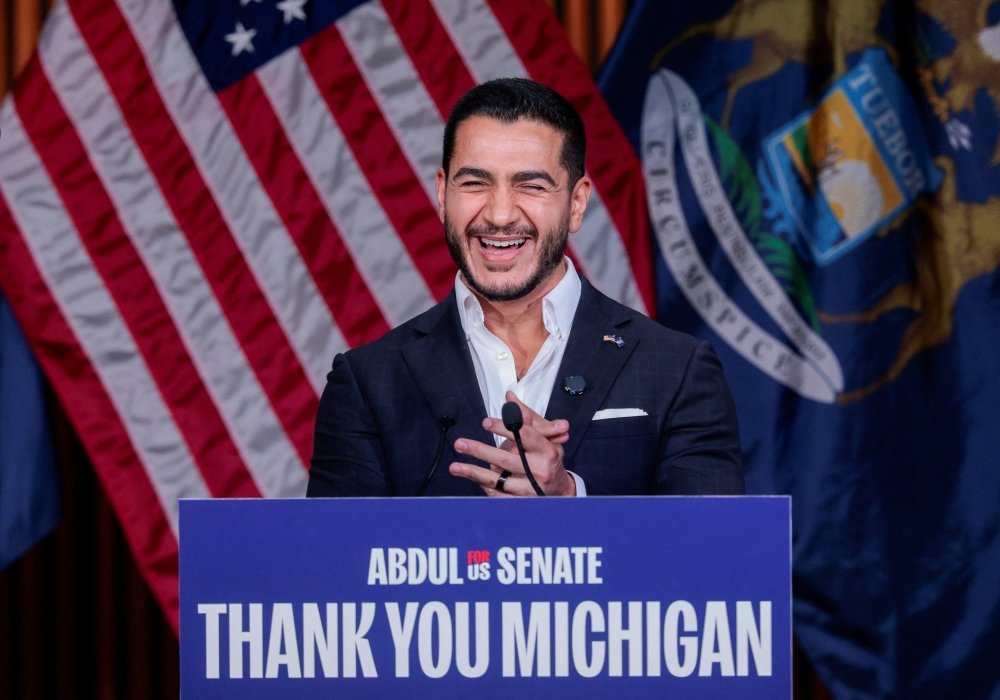
Abdul El-Sayed, a progressive politician and former public health official, has made American political history by winning the closely contested Michigan Senate election, becoming the first Muslim ever elected to the United States Senate. His victory over Republican candidate Mike Rogers represents a significant milestone for Muslim representation in American politics and adds another important achievement to the Democratic Party’s sweeping success in the 2026 midterm elections. The result also highlights the growing influence of progressive political movements and the ability of candidates from minority communities to compete successfully in politically divided states.
El-Sayed’s victory came after an intensely contested campaign marked by political attacks, ideological disagreements and considerable financial spending by organisations supporting both candidates. The Michigan race attracted national attention because it was widely viewed as a test of whether a progressive candidate could win a Senate election in a politically competitive state. His success has now placed him among the most prominent new figures in American politics and opened a historic chapter in the country’s legislative representation.

The Democratic candidate declared victory early on Wednesday at the Michigan Democratic Party headquarters in Detroit. Addressing supporters, he expressed gratitude to the communities that had supported his campaign throughout the state. He acknowledged the importance of the movement built during approximately 18 months of campaigning, which involved visits to major urban centres as well as smaller towns and communities across Michigan.
In his victory speech, El-Sayed thanked voters who had welcomed him into their homes and places of worship, including churches and synagogues. He described the campaign as a collective effort that had given him strength during difficult moments and helped overcome the political challenges surrounding his candidacy. His remarks also reflected an effort to present his victory as a broader achievement for democratic participation and social inclusion rather than simply a personal political success.
One of the most controversial aspects of the election was the criticism directed at El-Sayed because of his Muslim faith and background. President Donald Trump and several Republican allies repeatedly used his religious identity as a political issue during the campaign. Trump reportedly described him as a jihadist and made remarks suggesting that his name and religion would create difficulties for him in the Senate. Such comments attracted criticism because they shifted attention away from policy disagreements towards the candidate’s religious identity.
El-Sayed argued that his opponents had deliberately encouraged division instead of addressing the economic concerns affecting Michigan residents. He maintained that attacks against his faith were being used to distract voters from problems such as rising fuel prices, expensive groceries and the broader cost-of-living crisis. According to him, voters deserved political discussions focused on practical solutions rather than attempts to create suspicion about candidates because of their religious beliefs.
During his victory address, he delivered a message of national inclusion, arguing that America should remain a country where people from different religious and cultural backgrounds can participate equally in public life. His remarks were particularly significant given the Islamophobic rhetoric that had become a prominent feature of the campaign. For many Muslim Americans, his election represents a historic moment that could encourage greater political participation and strengthen the visibility of minority communities in national decision-making.
El-Sayed defeated Republican Mike Rogers, a former congressman who received Trump’s endorsement and presented himself as a close political ally of the president. Rogers had previously contested Michigan’s Senate election in 2024, losing to Democratic candidate Elissa Slotkin by approximately 0.3 percentage points. His return to the political contest in 2026 was intended to provide Republicans with another opportunity to capture a strategically important Senate seat.
However, the Republican candidate faced a difficult campaign against El-Sayed, whose political rise had already attracted national attention. Before entering the Senate race, El-Sayed served as Wayne County’s health director and developed a reputation as a progressive political figure with a strong interest in public healthcare and social welfare. His background in medicine and public health helped shape his campaign message, particularly on healthcare accessibility and government spending priorities.
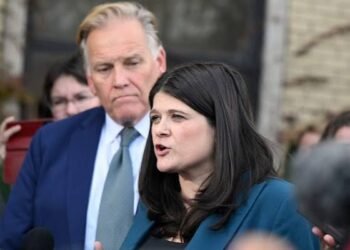
El-Sayed first attracted significant attention within the Democratic Party after defeating establishment-backed candidate Haley Stevens in the party’s primary earlier in the year. His success demonstrated the growing influence of progressive voters who wanted a candidate willing to challenge traditional party positions. The primary result also revealed divisions within the Democratic Party over its future political direction and the extent to which progressive ideas should shape national policy.
Healthcare reform was one of the central issues of his campaign. El-Sayed supported Medicare for All, a proposal aimed at establishing a universal healthcare system that would expand access to medical services and reduce the financial burden on patients. He argued that healthcare should be treated as an essential public service rather than a privilege determined by an individual’s income or employment circumstances.
His position on American military assistance to Israel also became a major subject of political debate. El-Sayed called for an end to US military aid to Israel and criticised the use of American taxpayers’ money to support military operations abroad. In his victory speech, he argued that public funds should be directed towards domestic priorities, including schools, healthcare services and infrastructure.
His comments reflected a wider debate within American politics about foreign policy spending and the country’s role in international conflicts. Progressive activists have increasingly demanded that the government reconsider military assistance programmes and give greater attention to domestic economic and social challenges. El-Sayed’s position helped him attract support among voters who wanted a more significant change in Washington’s foreign policy approach.
The financial scale of the Michigan Senate contest further demonstrated its national importance. The pro-Israel lobbying organisation AIPAC, through its political spending arm, the United Democracy Project, reportedly spent approximately $30 million during the Democratic primary in an effort to prevent El-Sayed from securing the nomination. The spending represented a record amount for a single race, highlighting the extent of opposition to his political positions.
The general election campaign was also marked by enormous advertising expenditure. According to AdImpact, political advertisements worth more than $220 million had been purchased by both parties by the middle of October. The spending reflected the importance of Michigan as a battleground state and the determination of both Democrats and Republicans to influence voters before election day.
Republicans attempted to portray El-Sayed as too politically extreme for Michigan, arguing that his progressive positions would not appeal to moderate and independent voters. An August survey conducted by Fox News found that 54 per cent of Michigan voters considered his political positions too extreme. However, the same survey indicated that 51 per cent believed Rogers was too closely aligned with Trump. The findings illustrated the challenges confronting both candidates as they attempted to appeal to voters with differing political priorities.
Rogers also faced difficulties over his relationship with the president. During much of the campaign, he supported Trump’s aggressive tariff policies and the administration’s military conflict with Iran. However, towards the final weeks of the election campaign, he began distancing himself from the president on both issues. He called for an end to the trade dispute with Canada and urged a swift conclusion to the conflict with Iran.
His changing position appeared to reflect concerns about the political consequences of Trump’s policies, particularly as rising fuel prices and economic uncertainty became major election issues. Rogers had previously opposed the Affordable Care Act, defended the administration’s immigration enforcement policies and repeated Trump’s false claims concerning the 2020 presidential election. These positions provided Democrats with opportunities to question his independence and political judgement.
Both candidates were competing to replace outgoing Democratic Senator Gary Peters, who had represented Michigan in the Senate since 2015. The seat was considered strategically important because of Michigan’s influence in national elections and its politically diverse electorate. El-Sayed’s victory therefore carries implications beyond the state’s political landscape, particularly as Democrats regain control of the Senate.
His election also comes at a time when American politics is experiencing renewed debate about religious diversity, immigration, minority representation and the boundaries of political rhetoric. Muslim Americans have increasingly participated in local and national elections, but their representation in the highest levels of federal government has remained limited. El-Sayed’s achievement could encourage other candidates from underrepresented communities to pursue national political office.
The result is also an important victory for progressive Democrats who have argued that the party should place greater emphasis on economic equality, universal healthcare and a reassessment of American foreign policy. His success in Michigan may strengthen their influence within the party and encourage similar candidates to challenge established political figures in future elections.
However, El-Sayed will now face the responsibility of translating his campaign promises into legislative action. His positions on healthcare, public spending and foreign policy are likely to generate considerable debate in Washington. He will also need to work with other Democratic lawmakers who may hold different views on important national and international issues.

For the Democratic Party, his victory represents both a historic breakthrough and a valuable addition to its newly strengthened Senate majority. For Michigan voters, the election has produced a representative whose campaign focused heavily on household expenses, healthcare access and the use of public money.
Ultimately, Abdul El-Sayed’s victory is more than an individual electoral achievement. It represents a significant moment in the evolution of American political representation, demonstrating that religious identity does not have to prevent a candidate from competing successfully for the country’s highest legislative positions. His arrival in the Senate is expected to bring fresh perspectives to national debates while placing questions of inclusion, economic fairness and government accountability firmly in the political spotlight.
Related News:
 Trump’s Revenge Drive Deepens GOP Divide
 Dreyfus Statue Finally Gets Permanent Paris Home
 Is America Ready for an AOC Presidential Run?
 Netanyahu faces protests and pressure at UN
 Brazil Election Draws Religion Into Final Campaign
 Families Await USS Abraham Lincoln Homecoming
 Latin America women fear rollback of rights
 USS Lincoln Ends Record 265-Day Deployment
 Bolsonaro Gains Key Endorsement Ahead of Brazil Runoff
 Jewish Greens Leader Calls for Polanski to Quit
 Trump Attacks Norway After Nobel Peace Prize Snub
 Trump Names Katie Zacharia as Next White House Spokesperson
 Trump Names Katie Zachariah as Next White House Press Secretary
 UK Greens Face Crisis Over Zionism and Extremism Row
 Ten US Midterm Races That Could Defy Expectations
 Millions Face Tougher Medicaid Rules From January
 Ohio Airports Become Key Hubs for ICE Deportation Flights
 Brazil Cuts Working Week to 40 Hours in Lula Election Boost
 Talarico Faces Tough Voter Test in Texas Senate Race
 Trump Slams Ukraine Strikes as Russia Ceasefire Collapses
 Obama Warns Against Threat to Ilhan Omar’s Citizenship
 Lula Supporters Make Final Push Ahead of Brazil Runoff
 Rubio Urges Cubans to Seize Moment for Change
 Vance Steps Up Midterm Role Amid 2028 Questions
 US Midterms Could Reshape Trump’s Second Term
 Trump’s Midterm Campaign Faces Racism and Political Backlash
 Obama Mocks Trump at Georgia Rally for Democrats
 Thousands Protest ICE Operations in Nationwide US Day of Action
 Epstein Files Reveal Trump Officials’ Emails with Financier
 UK Stands Firm on Falklands Amid US Rift
 Trump orders US troop pullout from Germany
 Judge halts deportation of Yemeni refugees in US
 Trump approval plunges amid Iran war fears
 Ohio’s Battle for Trust: Democrats Vying to Flip the Buckeye State
 US ‘Narco Boat’ Strikes Draw Global Outcry
 Afghan Families Left in Limbo Face Risk of Deportation
 US Awaits Iran Reply on New Ceasefire Proposal
 Immigration Judges Fear Pressure in Trump Era
 Farage and Reform UK Reshape British Politics
 Starmer Leadership Under Pressure After Setbacks
 House Curbs Trump’s War Powers in Rare Rebellion
 Trump’s Mount Rushmore Speech: A Divisive Anniversary
 Le Pen’s Popularity Holds Despite Conviction
 Houthis Strike Saudi Arabia as Middle East Tensions Rise
 Trump Hardens Canada Trade Stance as Talks Stall
 Trump Calls Iran War ‘Small Potatoes’ Despite US Deaths
 Lib Dems Prepare for Election Amid Reform Challenge
 US Networks Suspend Trump White House Pool Coverage
 Democrat Says ICE Restricted Detention Camp Oversight
 Xi urges Trump to avoid US-China military conflict
 Lula accuses Trump of seeking control over Brazil
 Republican Senator Questions Trump Ad Spending
 Madrid Tent Camp Grows as Spain Housing Crisis Deepens
 Burnham Opens Door to Possible UK Return to EU
 French School Protests Escalate as 400 Schools Close
 Lula Warns of Bolsonaro Family Return as Brazil Votes
 Bosnia’s Young People Look Beyond Election Hope
 Quebec separatists return to power without majority
 Canadian Veterans Condemn Trump Allies’ Military Remarks
 Argentina Protesters Resist Milei’s Land Sale Drive
 Trump Says He Deserves Nobel Peace Prize
 Gaza War Deepens India’s Strategic Ties With Israel
 Trump Rules Out Iran Attack Before US Elections
 Trump’s Russian Diesel Deal Sparks Ukraine Fury
 Panama Hit by Powerful 7.7-Magnitude Earthquake
 US Execution Livestream Plan Sparks Global Outrage
 French Students Protest Poor Conditions in Paris Suburbs
 Brazil Court Scandal Threatens Lula as Bolsonaros Rise
 Greta Thunberg Backs French Students in School Protests
 Gadi Eisenkot: Israel’s Anti-Netanyahu Challenger
 Trump Rallies GOP as Senate Democrats Boost Key Races
 Serbia Leader Linked to Controversial Trump Tower Plan
 Zelenskyy Says US Failed to Warn Kyiv of Russian Strikes
 Omar Claims US Raid on Residence Was Meant to Intimidate
 Greens Face Leadership Test as Jordon Steele-John Misconduct Claims Leave Party in Limbo
 Flávio Bolsonaro Reportedly Leaves Brazil After Election Defeat
 Trump’s Global Policies Put Republicans at Risk
 King Charles Faces Reparations Protests at Antigua Summit
 Global Crises Test Diplomacy as Trump’s Policies Face Scrutiny
 Haley Stevens Backs Republican Rival in Michigan Senate Race