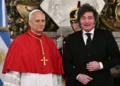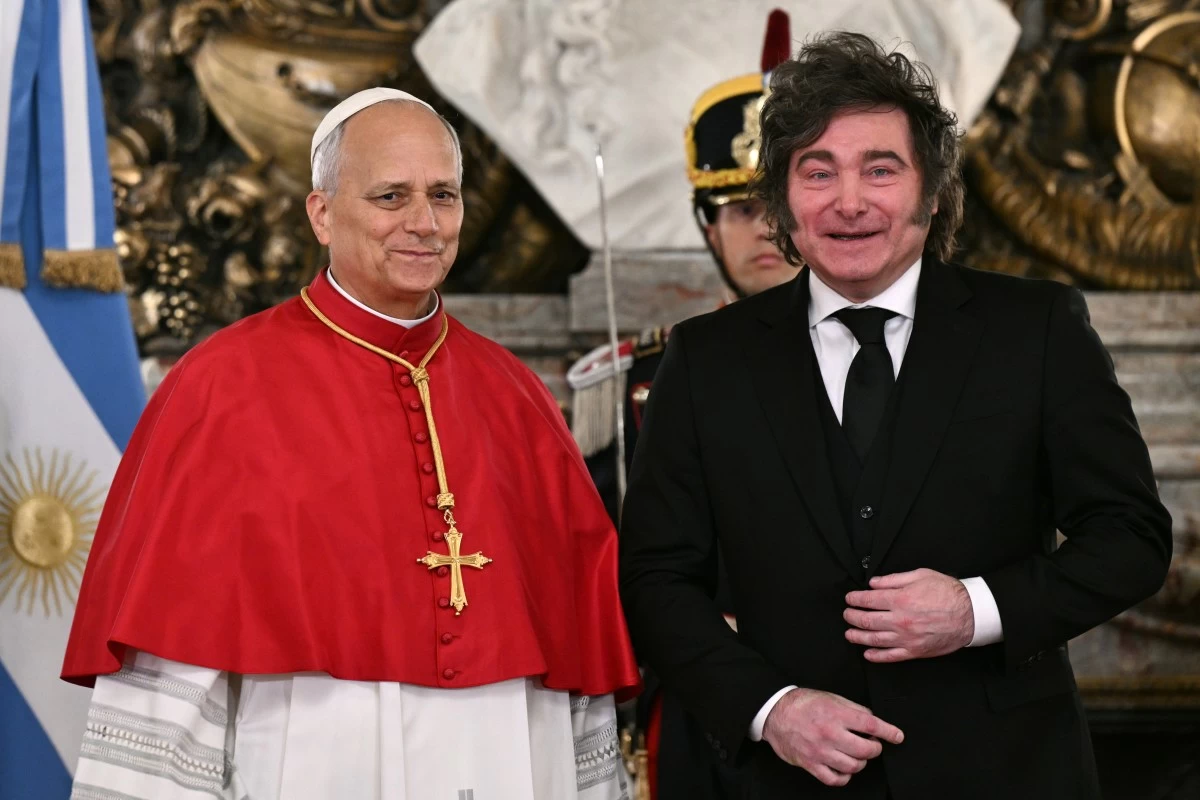
Pope Leo XIV has delivered a strong criticism of Argentine President Javier Milei’s austerity policies, warning that economic growth must benefit ordinary people rather than place additional burdens on vulnerable communities. Speaking during his historic visit to Buenos Aires, the pontiff emphasised the importance of social responsibility, economic fairness and protecting those struggling with poverty, disability and rising living costs. His remarks, delivered in front of an audience that responded with enthusiastic applause, have brought renewed attention to the social consequences of Milei’s controversial economic reforms.
The Pope arrived in Argentina on Sunday as part of an ambitious 12-day tour of Latin America. His visit to the country carries particular significance because it is the first papal visit to Argentina in nearly four decades. It also comes at a politically sensitive moment, following three years of sweeping austerity measures under Milei’s administration.

Addressing the country’s political leadership and other distinguished guests, Leo argued that economic systems should exist to serve human beings rather than force people to organise their lives around financial targets. He said the economy must work for the benefit of the population, stressing that economic progress loses its meaning when ordinary families cannot afford their basic needs.
The pontiff expressed particular concern for people who continue to struggle financially despite working hard. He highlighted the difficulties faced by pensioners, people with disabilities, individuals suffering from illnesses and families dependent on social assistance.
His remarks were widely interpreted as an indirect criticism of the Argentine government’s reductions in disability-related support and other social programmes. Although Leo did not directly name specific government decisions, his emphasis on protecting vulnerable people reflected concerns repeatedly raised by religious organisations and social welfare advocates.
The Pope also addressed the responsibilities of political leaders, telling Milei that strengthening democracy required a willingness to listen to different opinions and use language carefully. The message appeared especially significant given the Argentine president’s reputation for aggressive political rhetoric and frequent verbal attacks against critics, journalists and political opponents.
Leo’s intervention comes at a time when Argentina remains deeply divided over the economic direction pursued by Milei. Since taking office, the president has implemented a programme designed to reduce public spending, control inflation and restore confidence in the country’s struggling economy. His administration has sought to reduce the size of the state by cutting subsidies, limiting government expenditure and restructuring several public institutions.
Milei entered office promising to rescue Argentina from prolonged economic instability. His approach has included substantial reductions in welfare spending and difficult reforms affecting public hospitals, universities and pensioners. Supporters argue that the measures are necessary to correct years of financial mismanagement, while critics say the costs have fallen disproportionately on low-income households and vulnerable citizens.
The country’s poverty figures have fluctuated considerably during the period of economic adjustment. The poverty rate reached 32.3 per cent in September, reflecting the continuing challenges facing many households. The financial pressure has intensified public debate over whether economic stabilisation can be achieved without weakening essential social protections.
The Pope’s comments have therefore placed an important moral dimension at the centre of Argentina’s economic debate. While governments must manage public finances and pursue sustainable growth, Leo’s message suggested that economic decisions should also be judged by their impact on people’s dignity, security and ability to live decent lives.
Argentina also holds special significance for the Catholic Church because it was the birthplace of Pope Francis, Leo’s predecessor. Francis, who died after leading the Catholic Church, had frequently spoken about poverty, inequality and the responsibilities of governments towards disadvantaged communities.
His relationship with Milei was particularly difficult. During his political campaign, Milei repeatedly criticised Francis’s support for social justice and described the late pontiff in deeply offensive terms. Although he moderated his language after becoming president, disagreements over the role of the state and social welfare remained a significant source of tension.
Leo has described his visit as a continuation of the journey undertaken by Francis, suggesting that he intends to maintain the Church’s engagement with the social and economic challenges facing the region.
For many Argentines, the Pope’s arrival has generated considerable hope that his presence could help reduce political divisions. The country remains polarised between supporters of Milei’s economic programme and those who believe the austerity measures have caused unacceptable hardship.
Hundreds of people gathered to welcome the pontiff as he visited a monument dedicated to national liberation hero José de San Martín. Among them was Liliana Deblauwe, a 68-year-old retired teacher who expressed hope that Leo could bring people together.
She compared the unifying power of the Pope’s visit with the national excitement surrounding Argentina’s World Cup victories, suggesting that the pontiff might help bridge the divisions affecting society.
Large crowds also gathered outside the presidential palace, chanting his name as he arrived for an official meeting with Milei. The enthusiastic reception demonstrated the emotional significance of the visit for many people who view the Catholic Church as an important institution in Argentina’s national identity.
Some supporters travelled considerable distances to see the Pope. Brian Inacio Rodriguez, a 26-year-old job seeker, travelled overland for five days from Ushuaia, located at the southern tip of South America, to attend the events. He said he hoped the pontiff would bring greater peace to Argentina.
Leo arrived in Buenos Aires from neighbouring Uruguay, where he had begun his first Latin American tour as pope. During his visit there, he addressed problems including drug-related violence and child poverty, highlighting the need for stronger social protection across the region.
The 71-year-old pontiff’s demanding international schedule is also notable because it comes only weeks after he underwent surgery for lung cancer. Despite his recent medical treatment, he has undertaken an extensive programme of public engagements across the continent.
During his stay in Argentina, Leo is expected to visit a residential facility for people with disabilities and a prison, alongside celebrating three open-air religious services. The Catholic Church has estimated that approximately seven million people could attend the various events associated with the visit.
However, the trip is not only a religious occasion. It is also an important opportunity for the Church to assess its relationship with a society where traditional religious affiliation has gradually declined.
A recent University of Buenos Aires survey found that 57.7 per cent of respondents identified as Catholic, compared with approximately 90 per cent during the 1960s. The figures illustrate a significant transformation in the country’s religious landscape over several decades.
The Church hopes that Leo’s visit will strengthen public engagement and restore confidence among people who feel increasingly disconnected from religious institutions. His emphasis on social justice and human dignity may also appeal to citizens concerned about economic insecurity and inequality.
In Buenos Aires, the Pope additionally stressed the importance of integrity in public office. He warned that corruption damages public confidence in institutions and undermines the foundations of democratic government.
His comments carry particular relevance in a country that has experienced prolonged economic instability, political controversies and repeated concerns about institutional accountability.
Milei, meanwhile, continues to enjoy support among sections of the population who credit his policies with reducing inflation and challenging an established political system that had struggled to deliver economic stability. His supporters argue that difficult reforms are necessary to address structural problems that previous administrations failed to resolve.
Nevertheless, critics remain concerned about the consequences of restrictions on public spending, particularly in healthcare, disability assistance and education. The administration has also faced criticism over measures affecting democratic freedoms, including the right to protest.
The relationship between Milei and Leo has so far remained cordial, despite the Pope’s increasingly clear emphasis on the social responsibilities of economic policy. The Argentine Catholic Church, however, has been more openly critical of the government’s approach, arguing that essential public services should not be treated merely as budgetary expenses.

The Pope’s intervention is unlikely to resolve Argentina’s political disagreements immediately. However, his message has highlighted a fundamental question facing the country: whether economic recovery can be considered successful if significant sections of the population continue to struggle to meet their basic needs.
As Leo continues his Latin American tour, his visit to Argentina is emerging as a significant moment for both the Catholic Church and the country’s political leadership. His appeal for compassion, dialogue and inclusive economic development has placed the human consequences of austerity firmly in the national conversation.
For millions of Argentines facing uncertainty, the Pope’s message offers a reminder that economic progress should ultimately be measured not only through financial statistics but also through improvements in people’s everyday lives.
Related News:
 Millions Face Tougher Medicaid Rules From January
 Brazil Cuts Working Week to 40 Hours in Lula Election Boost
 Abdul El-Sayed Makes History as First Muslim US Senator
 James Talarico Makes History with Texas Senate Victory
 US Labor Department in turmoil after secretary resigns
 Trump approval plunges amid Iran war fears
 Trump Threatens UN Budget Cuts as US Pushes ‘Trade Over Aid’ Agenda
 US Awaits Iran Reply on New Ceasefire Proposal
 Hormuz Talks Near Critical Stage
 Dreyfus Statue Finally Gets Permanent Paris Home
 Is America Ready for an AOC Presidential Run?
 Trump Hardens Canada Trade Stance as Talks Stall
 Green Leader Targets Starmer’s Former Seat
 Trump Calls Iran War ‘Small Potatoes’ Despite US Deaths
 Trump Pledges $5,000 if Republicans Win Midterms
 Macron and Carney deepen France-Canada ties
 Trump and Mamdani Hold Cordial Gracie Mansion Meeting
 Trump Eyes Major Belarus Fertiliser Deal Amid Canada Trade Dispute
 Xi urges Trump to avoid US-China military conflict
 Lula accuses Trump of seeking control over Brazil
 Trump Ads Trigger Fight Over Taxpayer Money
 Burnham Opens Door to Possible UK Return to EU
 Senators warn US childcare policies could raise costs
 Brazil Election Draws Religion Into Final Campaign
 Families Await USS Abraham Lincoln Homecoming
 Pritzker’s National Profile Grows Ahead of 2028
 Latin America women fear rollback of rights
 Spain Sets Snap Election as Housing Crisis Deepens
 Tanker Attacked Near Qatar as Hormuz Tensions Escalate
 USS Lincoln Ends Record 265-Day Deployment
 US Senate Debates Turn Bitter as Midterms Near
 Turkey Rules Out Troops in Saudi Arabia’s Houthi Conflict
 Bolsonaro Gains Key Endorsement Ahead of Brazil Runoff
 Trump’s Russian Diesel Deal Sparks Ukraine Fury
 France Faces Debt Crisis as Protests and Markets Clash
 Trump Attacks Norway After Nobel Peace Prize Snub
 Trump Names Katie Zachariah as Next White House Press Secretary
 UK Greens Face Crisis Over Zionism and Extremism Row
 Ten US Midterm Races That Could Defy Expectations
 Brazil Court Scandal Threatens Lula as Bolsonaros Rise
 Ohio Airports Become Key Hubs for ICE Deportation Flights
 Trump Targets Arizona and Montana Amid GOP Election Worries
 Trump Rallies GOP as Senate Democrats Boost Key Races
 Talarico Faces Tough Voter Test in Texas Senate Race
 Serbia Leader Linked to Controversial Trump Tower Plan
 Trump Slams Ukraine Strikes as Russia Ceasefire Collapses
 Trump Halts New Russia Sanctions Amid Ukraine Rift
Trump Falsely Questions Ossoff’s Election Legitimacy
 Alberta Referendum Exposes Deep Divisions Over Independence
 Milan Luxury Stores Shut as Italy Plans Troop Deployment
 Trump Fears Shock Democratic Senate Win in Kansas
 Alberta Voters Reject Push for Canadian Independence
 Meta Faces Election Bias Claims Ahead of Brazil Runoff
 Trump Pledges $400m to Boost Republicans in Midterms
 Lula Supporters Make Final Push Ahead of Brazil Runoff
 Rubio Urges Cubans to Seize Moment for Change
 Vance Steps Up Midterm Role Amid 2028 Questions
 US Midterms Could Reshape Trump’s Second Term
 UK Aid Set to Fall Short of Reduced 2027 Target
Trump’s Midterm Campaign Faces Racism and Political Backlash
 Fed Expected to Hold Rates Steady Ahead of US Midterms
 Obama Mocks Trump at Georgia Rally for Democrats
 Trump’s Global Policies Put Republicans at Risk
 Global Crises Test Diplomacy as Trump’s Policies Face Scrutiny
 G20 Photo Cancelled as Russia Deepens Western Rift
 Haley Stevens Backs Republican Rival in Michigan Senate Race
 US Midterms Put Trump’s Presidency to the Test
 US Strikes Iran Island as Vance Signals Hope for Peace
 Australia Reviews UK Visa Rules Amid Worker Influx
Democrats Seize Senate Control in Major Trump Setback
 Democrats Retake US House in Major Trump Backlash
 UK Parliament Faces Risk of Notre Dame-Style Fire
 Paraguay President Quits After Major Bank Collapse
 Zelenskyy Seeks Urgent Help as Russia Hits Ukraine’s Power Grid
 Democrats Expand House Majority in Major Midterm Victory
 Judge Blocks Trump’s $100m Washington Arch Project
 Paraguay President Impeached and Arrested After Banking Crisis
 Qatar Pushes Iran Deal to Reopen Strait of Hormuz
 Trump’s Midterm Defeat Puts Maga’s Future in Doubt
 New Zealand’s Opportunity Party Challenges Populist Politics