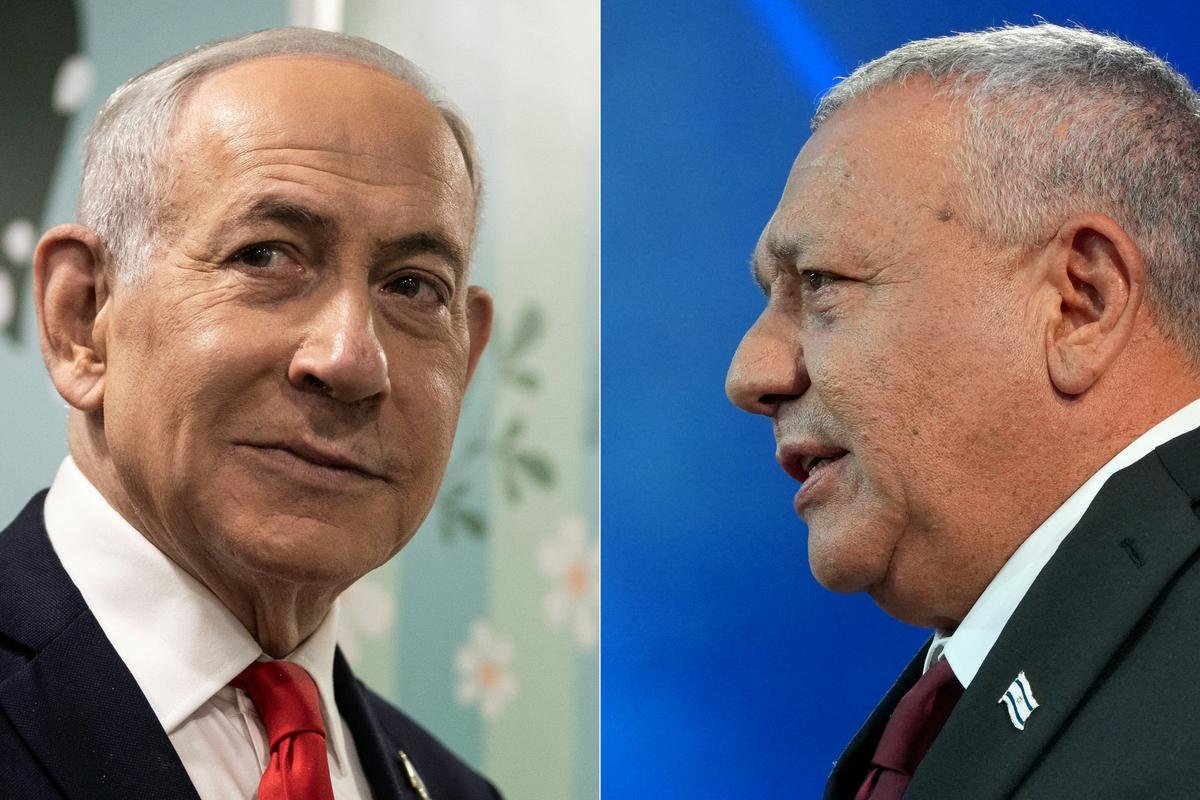
Israel is facing a potentially historic political turning point after the country’s main Palestinian political coalition emerged from the latest parliamentary elections with an unprecedented number of seats, creating a possible pathway to ending Benjamin Netanyahu’s government. Yousef Jabareen, leader of the Joint List, has expressed his willingness to cooperate with opposition parties to remove Netanyahu and his far-right allies from power, arguing that the election has created an opportunity to change the country’s political direction.
The election results have significantly altered the balance of power in Israel’s 120-member Knesset. Netanyahu’s governing coalition has lost its parliamentary majority, falling from 68 seats to 53. Meanwhile, the opposition Change bloc, led by retired military general Gadi Eisenkot, secured 48 seats. Arab political parties collectively won a record 19 seats, placing them in a potentially decisive position in negotiations over the formation of the next government.
The Joint List, led by Jabareen, secured 11 seats, while the more conservative Islamist party Ra’am, headed by Mansour Abbas, won eight. Their combined parliamentary strength means that neither of the main political blocs can easily ignore Arab representatives when calculating the possibilities of forming a stable government.

For Jabareen, the result represents more than an electoral achievement. He believes it provides an opportunity to address longstanding political, social and economic inequalities affecting Palestinian citizens of Israel, who constitute approximately one-fifth of the country’s population.
Speaking after the election, Jabareen said the immediate priority for many Arab Israeli voters was to remove Netanyahu’s government, particularly its most hardline political figures. He specifically identified National Security Minister Itamar Ben-Gvir and Finance Minister Bezalel Smotrich as members of the outgoing administration whose policies had contributed to an increasingly difficult environment for Arab communities.
Jabareen described the previous four years as an extremely challenging period for Palestinian citizens of Israel. He pointed to house demolitions, organised criminal activity, insufficient police intervention, inadequate public investment and discrimination in education and municipal services as major concerns.
He also highlighted incidents of physical attacks against Arab citizens and what he described as excessive police force. According to him, these problems have affected almost every aspect of everyday life, creating insecurity and frustration among communities that have repeatedly demanded equal treatment.
The increased turnout among Arab Israeli voters was one of the most significant developments in the election. Participation reportedly more than doubled, reaching approximately 80%, compared with the previous election. The strong mobilisation helped transform the electoral position of Arab political parties and demonstrated the importance of their voters in determining the country’s parliamentary balance.
Approximately 840,000 Palestinian citizens of Israel participated in the election. However, Palestinians living in the occupied West Bank and Gaza Strip were not eligible to vote in the Israeli parliamentary contest.
Jabareen believes the result reflects a growing determination among Arab voters to use democratic and parliamentary institutions to influence national political decisions. The unprecedented representation of Arab parties could now provide them with greater bargaining power over legislation, public spending and the future direction of government policy.
Israel’s President Isaac Herzog is expected to consult political leaders about their recommendations for forming the next government. With no political grouping holding an outright majority, the president’s consultations could become an important stage in determining who receives the first opportunity to assemble a governing coalition.
However, negotiations are expected to be complicated. Eisenkot and his political partners have ruled out forming a unity government with Netanyahu, but their willingness to cooperate with Arab parties remains uncertain.
Eisenkot has outlined several conditions for any potential partnership involving Arab political representatives. These include recognising Israel as a Jewish state, accepting military conscription requirements and condemning Hamas as a terrorist organisation.
Ra’am and its leader, Mansour Abbas, have indicated a willingness to participate in an Eisenkot-led government. The Joint List, however, has taken a different position. Jabareen has made clear that his coalition does not intend to become part of a government while Israel continues its occupation of Palestinian territories in the West Bank.
Nevertheless, he has indicated that the Joint List could support an opposition-led administration from outside the governing coalition. Such an arrangement could involve parliamentary cooperation and tactical voting to help an alternative government survive confidence votes and advance legislation.
Jabareen argued that the conditions established by Eisenkot were more relevant to parties seeking formal participation in the cabinet. Since the Joint List does not intend to join the government, he believes it should be possible to explore cooperation on specific political objectives without abandoning its fundamental positions.
He described removing Netanyahu’s government as an important first step towards changing Israeli policies and improving relations between the state and its Arab population. He also expressed hope that opposition parties would recognise the importance of this opportunity and work together despite their ideological differences.
The Joint List leader, a 54-year-old former law professor and head of the socialist Hadash party, has not yet held direct discussions with Eisenkot since the election. However, informal conversations among opposition representatives have reportedly begun.
One of the biggest challenges will be persuading all opposition parties to agree on a candidate for prime minister and accept some form of cooperation with Arab representatives. Right-wing opposition leader Avigdor Lieberman is reportedly among the most reluctant figures to support such an arrangement.
The extent of Lieberman’s objections remains uncertain. Political representatives associated with the Joint List have suggested that his resistance could reflect either genuine opposition to cooperation with Palestinian parties or negotiations over senior government positions.
Jabareen, however, believes the opposition does not necessarily need to wait until a complete government agreement has been reached before using its parliamentary majority to influence political developments.
He pointed out that the 67 lawmakers opposed to Netanyahu could potentially work together to change the leadership of the Knesset and gain control of important parliamentary committees. Replacing the parliamentary speaker and taking control of the committee responsible for legislative scheduling could provide the opposition with an immediate opportunity to reshape the legislative agenda.
Such steps could be particularly important if negotiations over government formation take longer than expected. The opposition could begin changing parliamentary procedures and reviewing controversial legislation even before reaching a final agreement on a new administration.
Among the Joint List’s priorities is restoring the independence of Israel’s judiciary. Jabareen argued that the new parliament should consider repealing laws introduced by the outgoing majority that, in his view, weakened judicial independence.
However, parliamentary cooperation would require more than simply removing Netanyahu. Jabareen has stressed that any political arrangement must address the systemic inequalities experienced by Palestinian citizens of Israel.
He argued that promises of national political change would have little meaning if Arab communities continued to experience discrimination in public services, education, municipal investment and law enforcement. Equal treatment, greater financial support for local authorities and improved opportunities for young people would therefore be essential elements of any meaningful political transition.
The Joint List also wants a broader political change in Israel’s approach towards the Palestinians. Jabareen called for an end to the ongoing war and the resumption of negotiations with Palestinian leadership. He believes that progress towards a political settlement would be necessary to create a more stable future for both Israelis and Palestinians.
Despite the opposition’s improved parliamentary position, Jabareen remains concerned about Netanyahu’s possible response to the election results. He accused the outgoing prime minister of attempting to undermine the legitimacy of Arab political representation through allegations concerning the use of Qatari money during the election campaign.
Netanyahu has made claims that Arab parties used Qatari funds illegally, although Jabareen dismissed the allegations as unsupported attempts to discredit the political influence of Arab citizens. He warned that such accusations could encourage hostility towards Arab communities and create a dangerous political atmosphere.
Another concern is the possibility that Netanyahu could use international tensions to delay or complicate the transfer of political power. Jabareen expressed particular concern about the prospect of renewed military confrontation with Iran involving Israel and the United States under Donald Trump.
He warned that any attempt to initiate another war or establish a new military agenda could undermine the possibility of a peaceful political transition. He called on opposition parties to present a united position against actions that might be used to preserve the outgoing government’s political influence.
The coming days are therefore expected to be crucial for Israel’s political future. Although the election has weakened Netanyahu’s parliamentary position, the opposition still faces the difficult task of overcoming ideological disagreements and building a workable parliamentary partnership.

For Jabareen and the Joint List, the election has created an opportunity to translate stronger Arab representation into meaningful political influence. Whether that opportunity leads to the formation of a new government or a broader parliamentary alliance remains uncertain.
Nevertheless, the record electoral performance of Arab parties has fundamentally changed the calculations surrounding Israel’s next government. As negotiations approach, the central question is whether opposition leaders will be prepared to work with Arab representatives to end Netanyahu’s rule and pursue a different political direction.
The outcome could have far-reaching consequences not only for Israel’s domestic political landscape but also for its relations with the Palestinians and the wider Middle East. For millions of people affected by the region’s continuing conflicts, the possibility of a political shift has created renewed attention and cautious expectations.
Related News:
 Israel Accused of Undermining Palestinian Life
 Saudi Pact Raises Risk of Pakistan Entering War
 Tanker Attacked Near Qatar as Hormuz Tensions Escalate
 Israel Promotes Film Challenging Controversial Gaza Documentary
 Delhi Braces for Youth Protests Over Voter Roll Dispute
 India’s Voter Roll Crisis Sparks Nationwide Protests
 Gadi Eisenkot: Israel’s Anti-Netanyahu Challenger
 Bedouin Women Drive Historic Arab Election Gains
 Iran Crisis Tests Trump’s Global Leadership
 Cartel crackdown raises fears of fresh violence
 US states redraw maps after voting rights ruling
 Former ICC prosecutor condemns US sanctions
 Houthis Strike Saudi Arabia as Middle East Tensions Rise
 Israeli Strike in Southern Lebanon Kills Seven
 Five Years of Taliban Rule Leave Afghanistan in Crisis
 Trump Calls Iran War ‘Small Potatoes’ Despite US Deaths
 Miliband Rejects Chief Rabbi’s West Bank Warning
 Saudi Arabia Shuts Oil Pipeline After Drone Attack
 Nearly 50,000 Flee as Houthis Advance in Yemen
 Fugitive Developer Rants at NSW Corruption Inquiry
 Amnesty Finds Coordinated Abuses in Iran Protest Crackdown
 Turkey LGBTQ Crackdown Expands With New Arrests
 Yemen War Displaces 125,000 as Fighting Intensifies
 Iran School Strike Raises War Crimes Questions, UN Says
 US Sanctions Open New Battle for Cuba Assets
 South Korea Rules Out Military Role in Iran War
 Trump Media Ban Triggers First Amendment Clash
 US Networks Suspend Trump White House Pool Coverage
 Japan PM Backs International Criminal Court
 Irish PM Backs Coach in Israel Football Dispute
 UK Pauses Chagos Deal Amid US Opposition
 Saudi intercepts Houthi missiles as oil fears grow
 Republican Senator Questions Trump Ad Spending
 Trump Ads Trigger Fight Over Taxpayer Money
 Drumcree Talks Falter as Legal Challenge Deepens
 UK-France Returns Deal Faces Expiry as Talks Stall
 New Maps Reveal Gaza’s Vast Destruction
 Germany Pledges €1bn Military Aid to Ukraine
 Latin America women fear rollback of rights
 Israel Marks Three Years Since October 7 Attack
 Trump Says He Deserves Nobel Peace Prize
 Sri Lanka Ex-First Lady Arrested Over Donation Probe
 India’s Youth Movement Alleges Mass Detentions Before Protest
 Gaza War Deepens India’s Strategic Ties With Israel
 Turkey Rules Out Troops in Saudi Arabia’s Houthi Conflict
 Pakistan Lawyers Back PTI Long March and Demands
 Trump Rules Out Iran Attack Before US Elections
 Delhi Tightens Security Ahead of Election Protest
 Controversial Vaccine Trial Approved in Guinea-Bissau
 Trump Attacks Norway After Nobel Peace Prize Snub
 Delhi Detains Protest Leaders as Youth Rally Escalates
 PTI Announces Swabi Rally Ahead of Long March Plans
 Riyadh Airport Hit Again as Yemen Conflict Escalates
 Brazil Court Scandal Threatens Lula as Bolsonaros Rise
 Ohio Airports Become Key Hubs for ICE Deportation Flights
 Farage Rejects Claims Reform Would Let Troops Shoot Migrants
 UK Urges Interpol to Reject Argentina’s Falklands Arrest Requests
 Ukrainian Soldier Faces Trial Over Nord Stream Blast
 Judge Blocks Trump White House Media Ban
 Serbia Leader Linked to Controversial Trump Tower Plan
 Saudi Arabia Faces Outcry Over Execution of Former Minor
 Suu Kyi Appears in Rare Photos After Royal Gift
 Zelenskyy Accuses US of Delaying Ukraine Missile Supplies
 Fifth Foreign Firm Withdraws From Jerusalem Cable Car Plan
 Massive Student-Led Movement Marches in Belgrade Ahead of Serbian Vote
 Netanyahu Faces Defining Election Test as Israel Divides
 Xi Jinping Tightens China’s Anti-Corruption Campaign
 Ukraine Peace Talks Set to Resume in November
 Serbia’s Student Victory Sparks a ‘Smell of Freedom’
 Trump’s Midterm Campaign Faces Racism and Political Backlash
 China Expels Record 33 Officials in Xi Jinping Purge
 UAE Nominee Faces Backlash Over Sudan War Role
 Global Crises Test Diplomacy as Trump’s Policies Face Scrutiny
 Injured Mojtaba Khamenei Elevated as Iran Leader
 Ben Roberts-Smith Denies War Crime Allegations in First Statement
 Maldives Cave Diving Tragedy Raises Safety Alarm
 Badenoch Raises Prospect of 2027 UK Election
 Yemen government launches offensive against Houthis
 Pakistan School Roof Collapse Kills 27 Students
 Trump Again Demands Peltola Prosecution as Alaska Race Escalates