Published: 10 October 2026. The English Chronicle Desk. The English Chronicle Online.
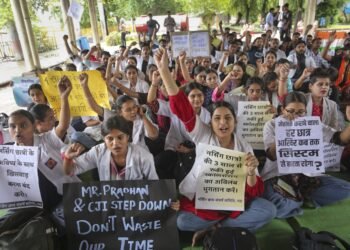
Indian authorities detained scores of protesters in New Delhi on Saturday as thousands of police officers and paramilitary personnel were deployed across the capital to prevent a major youth-led demonstration demanding the resignation of Chief Election Commissioner Gyanesh Kumar. The protest, organised by the satirical youth movement known as the Cockroach Janta Party, has intensified a growing political dispute over the revision of voter lists and allegations that the process could benefit Prime Minister Narendra Modi’s Bharatiya Janata Party (BJP).
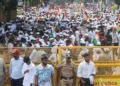
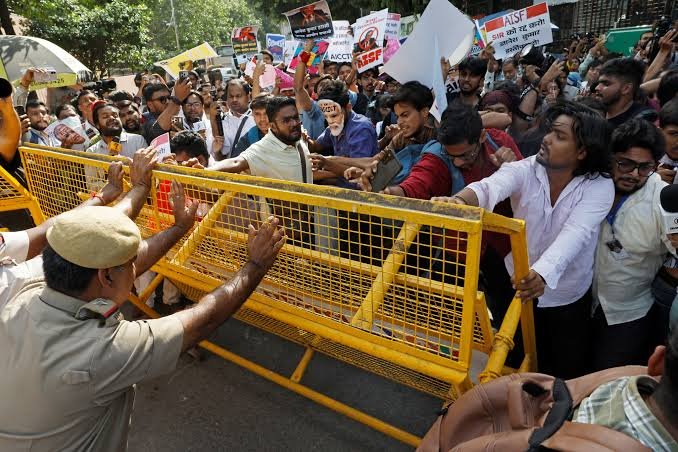
The authorities imposed extensive security restrictions ahead of the planned gathering, including the closure of several metro stations, the cancellation of some train services and a temporary suspension of mobile internet around the protest area. Police erected multiple layers of barricades on roads leading towards Jantar Mantar, a designated protest site in central New Delhi, as the government prepared for a demonstration organisers hoped would attract thousands of participants.

The protest has emerged as a significant test of the relationship between young demonstrators, opposition groups and the authorities at a time when questions about electoral fairness are becoming increasingly prominent in Indian politics. Organisers have described the mobilisation as an effort to defend democracy, while the government and election authorities have rejected allegations that the voter-list revision was designed to influence electoral outcomes.
Television footage showed police pursuing groups of young protesters in the capital’s central business district before detaining them and transporting them away in vehicles. A police source said approximately 200 people had been detained in the area. Authorities also confirmed the detention of Dhruv Rathee, a prominent YouTube personality who has supported the protest movement, outside Delhi.
The precise number of people detained nationwide remained disputed. The Cockroach Janta Party claimed that at least 10,000 people, including demonstrators travelling towards the capital by train, had been detained across India. Police had not publicly responded to the movement’s broader allegations of mass detentions, leaving the scale of the reported crackdown unclear.
The immediate dispute centres on a revision of electoral rolls overseen by Chief Election Commissioner Gyanesh Kumar. Critics argue that the process has raised serious concerns about transparency and the potential exclusion of eligible voters. The controversy escalated after a newspaper report said Kumar’s deputies had questioned and disagreed with him over aspects of the revision process, which reportedly resulted in around 130 million names being removed from voter lists.
The reported scale of the deletions has become a central issue for opposition parties and protest organisers. Removing names from electoral rolls can be a legitimate part of maintaining accurate voter records, particularly when authorities identify duplicate entries, deceased voters or individuals who no longer meet registration requirements. However, large-scale deletions can also create serious concerns if eligible citizens are removed incorrectly or cannot easily restore their registration before an election.
The key question is therefore not simply how many names have been removed, but whether the process has followed transparent procedures, provided adequate safeguards and allowed affected citizens to challenge decisions. Independent scrutiny and accessible information about the reasons for deletions are essential to maintaining public confidence in an electoral system.
Opposition parties in India have repeatedly accused the government of attempting to shape electoral conditions in its favour. The BJP has rejected those allegations, arguing that its electoral success reflects Narendra Modi’s popularity, the country’s economic performance and the party’s political organisation. It has also accused opposition groups of misleading voters because they have struggled to defeat the ruling party in elections.
Neither the election commission nor the BJP has accepted the accusations surrounding the latest revision. Kumar has not publicly commented on the controversy described in the report. Without a full public explanation of the disputed decisions and the procedures used to remove names, the disagreement is likely to remain politically sensitive.
The Cockroach Janta Party, commonly referred to as CJP, began as an online satirical movement before developing into a vehicle for youth-led political protest. Its unusual name and digital origins have helped distinguish it from traditional political organisations, while its campaign has increasingly focused on government accountability, examination controversies and democratic rights.
The movement’s current mobilisation follows a series of demonstrations that began the previous week. Organisers have sought to turn anger over the electoral-roll revision into a broader campaign against what they view as institutional failures and restrictions on public dissent.
The movement has previously been associated with protests over examination paper leaks and other education-related controversies. Demonstrations earlier in the year contributed to pressure that led to the resignation of India’s education minister, according to the report. That episode appears to have encouraged organisers and supporters to believe that sustained public mobilisation can force political leaders to respond to demands for accountability.
The latest confrontation comes at a sensitive point in India’s political calendar. Several important state elections are expected to begin in early 2027, including in Uttar Pradesh, the country’s most populous state, which is governed by the BJP. The outcome of those elections could influence the national political debate and provide an indication of how voters are responding to the government’s record.
Although the voter-list dispute is formally centred on election administration, its implications extend beyond the immediate question of registration. Public trust in elections depends on citizens believing that they can participate freely and that electoral procedures are applied consistently. Allegations of wrongful deletions can undermine that confidence even before voting begins, particularly when they concern large numbers of people.
For the government, the challenge is to demonstrate that the revision process is lawful, impartial and open to scrutiny. For the opposition, the challenge is to substantiate its allegations with evidence while ensuring that genuine administrative concerns are distinguished from claims made for political advantage. An independent and transparent examination of disputed cases could help clarify the situation and reduce speculation.
Security arrangements in Delhi have added another dimension to the dispute. Police said on Friday that permission had not been granted for the proposed demonstration because the application was submitted too late and the organisers had breached commitments made during previous protests. Authorities said they were required to enforce the law and maintain public order, warning that participants could face legal action if they violated the restrictions.
CJP leaders rejected the decision and insisted that the demonstration would proceed. The party’s chief, Abhijeet Dipke, criticised the government’s response, arguing that the authorities were prepared to disrupt daily life across the capital rather than allow citizens to assemble peacefully at a designated protest location.
Dipke also questioned the scale of the shutdown measures, warning that the restrictions could inconvenience millions of residents who were not involved in the demonstration. His comments reflected the movement’s argument that broad security measures risk punishing ordinary citizens alongside those seeking to protest.
The restrictions have affected transport and communications around the planned gathering. Dozens of metro stations were ordered closed, while several trains travelling to New Delhi were cancelled. India’s Supreme Court intervened on Friday, stating that some trains must continue operating and that authorities should not impose a blanket closure of metro stations.
The court’s intervention highlighted the need to balance public safety with access to essential transport. Large demonstrations can require significant security planning, particularly when authorities anticipate possible clashes or large crowds. However, restrictions that extend beyond the immediate protest area can disrupt workers, students, patients and other residents who rely on public transport to reach their destinations.
Authorities also ordered mobile internet services suspended within a radius of approximately four kilometres of the protest area, with the restriction scheduled to run from Friday night until Saturday night, according to a report by the ANI news agency citing a government order.
Internet restrictions have become a recurring point of debate during periods of unrest in India. Governments may argue that temporary suspensions are necessary to prevent the spread of misinformation or coordinate violence. Critics counter that such measures can prevent peaceful protesters from communicating, make it harder for families to locate detained relatives and restrict the circulation of information about police conduct.
The impact of the restrictions in Delhi will depend on their implementation, duration and geographical scope. Even when introduced for security reasons, communications shutdowns raise questions about proportionality, transparency and the public’s ability to access reliable information during politically sensitive events.
Reports that demonstrators travelling by train were detained in different parts of the country have further fuelled the controversy. The Hindu newspaper reported that some people detained in Madhya Pradesh, a state in central India, were taken to hotels. The available information does not establish the circumstances of every detention or whether those individuals were formally charged with an offence.
The distinction matters because authorities have a responsibility to enforce lawful restrictions, while citizens retain rights to peaceful expression and assembly subject to applicable law. Clear information about the reasons for detention, access to legal assistance and the treatment of those held would help establish whether enforcement measures were proportionate.
As police and paramilitary personnel maintained a heavy presence across New Delhi, the protest exposed the widening gap between the authorities and a section of young Indians who believe public pressure is necessary to defend democratic institutions. The movement’s claims have not been independently established in full, and the election commission and ruling party continue to reject allegations of political manipulation.

Nevertheless, the scale of the reported voter-list changes and the competing accounts of the revision process have made transparency a central issue. The credibility of the election system depends not only on the final results but also on public confidence in the procedures that determine who can vote.
Whether the Cockroach Janta Party can sustain its momentum remains uncertain. What is clear is that the dispute has grown beyond a single demonstration, bringing electoral administration, civil liberties, public order and the political influence of younger citizens into the same debate. The authorities’ handling of the protests, alongside their response to questions about voter registration, could shape public perceptions of democratic accountability ahead of the important state elections expected in 2027.
Related News:
 India’s Youth Movement Alleges Mass Detentions Before Protest
 Five Years of Taliban Rule Leave Afghanistan in Crisis
 Nepal Flood Survivors Face Unimaginable Loss
 Nepal Tunnel Rescue Offers Hope Amid Flood Devastation
 Nepal PM calls deadly flood a global climate warning
 Drumcree Talks Falter as Legal Challenge Deepens
 UK-France Returns Deal Faces Expiry as Talks Stall
 Latin America women fear rollback of rights
 Delhi Freezes Promotion of Police Officer After Allegations
 Sri Lanka Ex-First Lady Arrested Over Donation Probe
 Gaza War Deepens India’s Strategic Ties With Israel
 Pakistan Lawyers Back PTI Long March and Demands
 Delhi Tightens Security Ahead of Election Protest
 Controversial Vaccine Trial Approved in Guinea-Bissau
 Trump Attacks Norway After Nobel Peace Prize Snub
 Cartel crackdown raises fears of fresh violence
 US states redraw maps after voting rights ruling
 Immigration Judges Fear Pressure in Trump Era
 Trump’s Revenge Drive Deepens GOP Divide
 Le Pen’s Popularity Holds Despite Conviction
 Israeli Strike in Southern Lebanon Kills Seven
 Is America Ready for an AOC Presidential Run?
 Nepal-Tibet Flood Death Toll Rises as 2,478 Remain Missing
 Patriot Platform Raises Concern Across Britain
 Reform UK Receives Record £36m Donation From Crypto Billionaire
 Israel Accused of Undermining Palestinian Life
 Election Candidate Abuse Raises Alarm in England
 Amnesty Finds Coordinated Abuses in Iran Protest Crackdown
 Turkey LGBTQ Crackdown Expands With New Arrests
 Yemen War Displaces 125,000 as Fighting Intensifies
 Iran School Strike Raises War Crimes Questions, UN Says
 Saudi Pact Raises Risk of Pakistan Entering War
 Trump Media Ban Triggers First Amendment Clash
 Lib Dems Prepare for Election Amid Reform Challenge
 China’s MeToo Movement Finds New Ways to Survive
 US Networks Suspend Trump White House Pool Coverage
 Democrat Says ICE Restricted Detention Camp Oversight
 Japan PM Backs International Criminal Court
 King Refers Jamaica Slavery Petition to Privy Council
 UK Pauses Chagos Deal Amid US Opposition
 Judge orders Trump to restore access for three media outlets
 Elif Eralp Emerges as Berlin’s Next Political Force
 Trump Asked Xi About Buying US Weapons
 Republican Senator Questions Trump Ad Spending
 Free Speech Emerges as Key UK Election Issue
 South Korea-Ukraine Row Erupts Over North Korean POWs
 French Student Protests Escalate Into Violent Clashes
 Israel-bound Plane Lands in Saudi Arabia After Cockpit Fight
 Trump Ads Trigger Fight Over Taxpayer Money
 Burnham Opens Door to Possible UK Return to EU
 Green Party faces dispute over Zionism motion
 Hundreds of UK prisoners released early amid overcrowding
 Drumcree Talks End Without Agreement Ahead of Appeal
 Pilot Recalls Fight to Save Flydubai Passengers
 Badenoch Raises Prospect of 2027 UK Election
 French School Protests Escalate as 400 Schools Close
 Germany Pledges €1bn Military Aid to Ukraine
 Pacific Climate Summit Draws Limited Global Leaders
 Tanker Attacked Near Qatar as Hormuz Tensions Escalate
 NSW Police Bid Delays Inquiry Into Sydney Protest
 Trump Says He Deserves Nobel Peace Prize
 ICE Agent Shoots Man in New York as Child Escapes Harm
 Israel Promotes Film Challenging Controversial Gaza Documentary
 Turkey Rules Out Troops in Saudi Arabia’s Houthi Conflict
 Bolsonaro Gains Key Endorsement Ahead of Brazil Runoff
 Navi Pillay Wins Nobel Peace Prize for Justice
 UAE Says Co-Pilot Planned Suicide Attack on Israel
 Premier League Faces a Crisis of Trust After City Verdict
 Ben Roberts-Smith Denies War Crime Allegations in First Statement
 Maldives Cave Diving Tragedy Raises Safety Alarm
 Farage and Reform UK Reshape British Politics
 New Footage Revives Peter Falconio Mystery
 US Sanctions Open New Battle for Cuba Assets
 Madrid Tent Camp Grows as Spain Housing Crisis Deepens
 London Facial Recognition Trial Ends With False Alert
 UK University Strikes Spread as Financial Pressure Grows
 South Korea Probes Fuel Shipments to Russia
 Japan’s Princess Aiko Fuels Debate Over Royal Succession
 South Africa Withdraws Directive on Asylum Applications
 Trump’s Russian Diesel Deal Sparks Ukraine Fury