A United Nations tribunal has raised serious questions about the evidence used to dismiss nine Palestinian humanitarian workers from the UN Relief and Works Agency for Palestine Refugees (UNRWA) in 2024, concluding that the decision was based almost entirely on unproven allegations provided by Israel. The ruling has renewed scrutiny of the United Nations’ handling of the controversy and highlighted the potential consequences of dismissing humanitarian personnel without independently verified evidence. It has also raised concerns about the impact of the decision on humanitarian operations in Gaza, where millions of Palestinians have faced severe difficulties accessing food, healthcare, shelter and other essential services.
The tribunal’s judgment, which was reviewed by the Guardian, found that the allegations against the dismissed employees had limited evidentiary value and reliability. In one particularly significant finding, it stated that the information used against the workers appeared to have originated almost entirely from Israeli authorities. The ruling has therefore raised questions about whether UNRWA followed appropriate procedures before taking disciplinary action against its Palestinian employees.

The controversy began in January 2024, when UNRWA terminated the contracts of nine Palestinian staff members following allegations from Israel that some agency employees had been involved in the Hamas-led attacks of 7 October 2023. The agency informed the workers that the allegations against them were considered very serious and credible and that their dismissals were necessary in the interests of the organisation.
The decision was taken under the leadership of former UNRWA Commissioner-General Philippe Lazzarini following consultations with UN Secretary-General António Guterres. At the time, the allegations created an international crisis for the humanitarian organisation, which was already operating under extraordinary pressure because of the conflict in Gaza.
Israel had accused several UNRWA employees of having links to Hamas or involvement in the October attacks. The allegations prompted an international investigation and intensified political pressure on the United Nations agency. In August 2024, a UN investigation concluded that there was evidence suggesting nine employees might have been involved in the attacks, leading to the confirmation of their dismissals.
However, the latest tribunal judgment has challenged the strength of the information supporting those decisions. The tribunal examined the case of one dismissed employee, Abu Awad, and concluded that UNRWA had failed to provide sufficient evidence to justify terminating his employment.
The allegations against Awad included claims that he served as a platoon commander in the military wing of Hamas, known as the Al-Qassam Brigades. He strongly rejected the accusation. Importantly, he was not alleged to have physically participated in the 7 October attacks. Witness statements presented to the tribunal indicated that he had been travelling on a regular UNRWA staff bus on the day of the incident.
Another allegation suggested that Awad had received instructions through a telephone conversation intercepted by Israeli intelligence to monitor developments on 7 October while receiving intelligence updates from Hamas concerning the attacks.
The tribunal found that Israeli security officials had not adequately explained who allegedly made the telephone call or established how the mobile phone receiving it was connected to Awad. It also questioned the reliability of intercepted telephone conversations and electronic messages presented as evidence.
One particularly concerning issue involved mistaken identity linked to a cloned SIM card. Such incidents can occur in Gaza, where communication networks have experienced serious disruption and technical difficulties during the conflict. The tribunal noted that the possibility of mistaken identity weakened the reliability of the information used against the employees.
The judgment also questioned claims based on voice recognition. Some transcripts examined by UN investigators did not support the conclusions that Israeli authorities had drawn from them, particularly regarding alleged connections to Hamas or the October attacks.
The tribunal further highlighted shortcomings in the investigation process. An internal UN investigation had not interviewed the 19 employees initially accused by Israel because of concerns about their safety and security. As a result, the tribunal questioned how the allegations could have been properly assessed when investigators had not directly interviewed the individuals concerned.
It observed that the accusations against Awad and other employees appeared to rely almost entirely on information held by Israel. This finding has become central to the wider debate about the standards of evidence required before humanitarian organisations take disciplinary action against their employees.
The tribunal also examined the documents UNRWA submitted to explain its decision. The agency referred to information supplied by the Israeli government, a report published by the Times of Israel and material from UN Watch, a pro-Israel advocacy organisation that has campaigned against UNRWA.
However, the tribunal expressed doubts about whether these materials had actually informed the original dismissal decision. It noted that the supporting documents submitted by the agency had been produced after 26 January 2024, the date on which the disputed decision was taken.
Ultimately, the tribunal did not determine whether the allegations against Awad were true or false. Instead, it concluded that UNRWA had failed to produce sufficient evidence to support its decision to terminate his employment. It awarded him compensation equivalent to one year’s salary, along with an additional $5,000 for moral damages.
The ruling has also revived criticism of the agency’s response to the allegations. Chris Gunness, a former UNRWA spokesperson, strongly criticised the decision to dismiss the employees without independently established evidence. He argued that the agency’s actions had effectively reinforced public perceptions of guilt and damaged its institutional credibility.
Gunness also pointed to the financial consequences of the controversy. Following Israel’s allegations, the administration of former US President Joe Biden suspended funding to UNRWA, while several other international donors temporarily followed a similar approach. The funding interruptions created a financial shortfall of approximately $450 million, placing considerable pressure on the agency’s ability to continue its humanitarian operations.
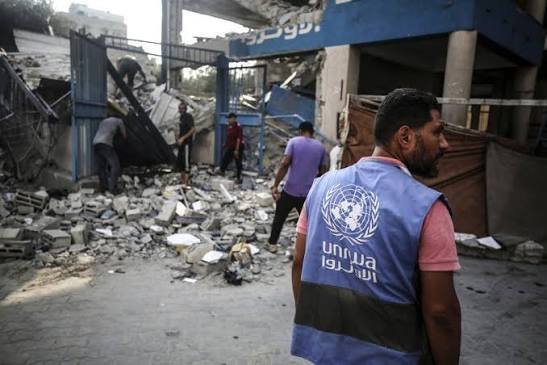
The financial crisis was particularly damaging because UNRWA plays a central role in delivering assistance to Palestinian refugees and vulnerable communities. In Gaza, its operations have included providing emergency food assistance, healthcare services, shelter support and essential supplies to people displaced by the conflict.
The dismissals were initially viewed by some observers as an attempt to protect the organisation from political pressure and preserve its ability to operate. Lazzarini apparently hoped that taking swift action would demonstrate that UNRWA was treating the allegations seriously and prevent the controversy from threatening its humanitarian mission.
However, the decision failed to prevent the suspension of international funding. Instead, it intensified questions about the agency’s independence and the procedures used to investigate accusations against its employees.
In February 2024, Lazzarini acknowledged that the dismissals involved what he described as reverse due process, because the termination decisions had been made before the investigation was completed. He explained that his priority had been to protect the organisation’s ability to continue delivering humanitarian assistance at a time when its entire operation was under threat.
Lazzarini, who left the commissioner-general position in March 2026, has declined to discuss the latest tribunal ruling in detail, indicating that the decision could be appealed.
The dispute has also contributed to a wider political confrontation between Israel and UNRWA. Following the allegations, Israeli authorities claimed that Hamas had significantly infiltrated the organisation. In October 2024, Israel’s parliament voted to prohibit UNRWA from operating within Israel and the occupied Palestinian territories, further complicating the agency’s humanitarian activities.
Nevertheless, international legal scrutiny has challenged the broader allegations against the organisation. In October 2025, the International Court of Justice stated that Israel had not substantiated its claims that a significant proportion of UNRWA employees were members of Hamas or other armed groups designated as terrorist organisations.
The latest tribunal ruling does not establish that every allegation made against UNRWA employees was false. Nor does it determine whether the agency was free from individual misconduct. Instead, it highlights the importance of independently verifiable evidence, fair investigations and proper procedures before employees are dismissed over allegations of serious wrongdoing.
For humanitarian organisations operating in conflict zones, the case raises fundamental questions about how they should respond when governments make security-related accusations against their staff. Such organisations must take credible allegations seriously while ensuring that employees are not deprived of their rights through decisions based on unverified information.
The consequences extend beyond the individuals involved. Humanitarian agencies depend on public confidence, international financial support and the cooperation of local communities to deliver assistance. When their credibility is weakened, the people most likely to suffer are civilians who rely on emergency services and humanitarian protection.

In Gaza, where the humanitarian situation remains extremely difficult, any disruption to relief operations can have serious consequences for families already struggling to survive. The tribunal’s findings therefore carry significance beyond the employment dispute, bringing renewed attention to the responsibilities of international institutions and the importance of protecting humanitarian operations from political pressure.
As questions remain over whether the ruling will face an appeal, the case is likely to continue influencing discussions about UNRWA’s accountability, independence and future role in Palestine. It also serves as a reminder that allegations of serious misconduct must be examined through transparent and credible investigations rather than accepted as established facts without sufficient supporting evidence.
Related News:
 Latin America women fear rollback of rights
 Trump’s Midterm Campaign Faces Racism and Political Backlash
 Malaysia to Deport Thousands to Genocide-Hit Myanmar
 US ‘Narco Boat’ Strikes Draw Global Outcry
 Immigration Judges Fear Pressure in Trump Era
 Dreyfus Statue Finally Gets Permanent Paris Home
 Israeli Strike in Southern Lebanon Kills Seven
 Is America Ready for an AOC Presidential Run?
 Five Years of Taliban Rule Leave Afghanistan in Crisis
 Ukraine Villagers Demand Answers After Deadly Arms Depot Strike
 Israel Accused of Undermining Palestinian Life
 Gaza Strike Kills Child and Paramedic
 Texas Transfers Raise Fears for Migrant Children
 Democrat Says ICE Restricted Detention Camp Oversight
 King Refers Jamaica Slavery Petition to Privy Council
 Christa Pike Wakes After Failed Tennessee Execution
 ICE Agent Shoots Man in New York as Child Escapes Harm
 Israel Promotes Film Challenging Controversial Gaza Documentary
 Bolsonaro Gains Key Endorsement Ahead of Brazil Runoff
 Navi Pillay Wins Nobel Peace Prize for Justice
 US Execution Livestream Plan Sparks Global Outrage
 Trump Attacks Norway After Nobel Peace Prize Snub
 Trump Names Katie Zacharia as Next White House Spokesperson
 Millions Face Tougher Medicaid Rules From January
 Ohio Airports Become Key Hubs for ICE Deportation Flights
 Zelenskyy Says US Failed to Warn Kyiv of Russian Strikes
 Serbia’s Student Victory Sparks a ‘Smell of Freedom’
 King Charles Faces Caribbean Slavery Apology Demands
 Obama Mocks Trump at Georgia Rally for Democrats
 UAE Nominee Faces Backlash Over Sudan War Role
 Paraguay President Impeached and Arrested After Banking Crisis
 Stephen Miller’s Rise Puts Hardline Views at Centre of Power
 Iran Death Row Boxer Wins Prestigious Human Rights Award
 Melania Trump Epstein remarks spark survivor backlash
 Judge halts deportation of Yemeni refugees in US
 Afghan Families Left in Limbo Face Risk of Deportation
 New Footage Revives Peter Falconio Mystery
 Ukraine Creates Long-Range Strike Command
 Trump Calls Iran War ‘Small Potatoes’ Despite US Deaths
 Man Arrested in Mississippi Woman’s Death
 Royal Crown Branded Enslaved Africans in Britain’s Slave Trade
 Texas Charges Seven Noncitizens in Voting Crackdown
 Lib Dems Prepare for Election Amid Reform Challenge
 US Networks Suspend Trump White House Pool Coverage
 Japan PM Backs International Criminal Court
 Lula accuses Trump of seeking control over Brazil
 Republican Senator Questions Trump Ad Spending
 Tennessee Set to Execute Woman After Clemency Denied
 Cornell Fraternity Assault Investigation Reopened
 French School Protests Escalate as 400 Schools Close
 Families Await USS Abraham Lincoln Homecoming
 Iran Nobel Laureate Reveals Prison Torture and Fears
 Trump Says He Deserves Nobel Peace Prize
 USS Lincoln Ends Record 265-Day Deployment
 Gaza War Deepens India’s Strategic Ties With Israel
 EU Divisions Deepen Over Israel Policy
 Trump Names Katie Zachariah as Next White House Press Secretary
 French Students Protest Poor Conditions in Paris Suburbs
 Brazil Court Scandal Threatens Lula as Bolsonaros Rise
 Greta Thunberg Backs French Students in School Protests
 Senegal LGBTQ+ Crackdown Drives People Into Hiding
 Gadi Eisenkot: Israel’s Anti-Netanyahu Challenger
 Serbia Leader Linked to Controversial Trump Tower Plan
 UK Bill Faces Warning Over Fayed Trafficking Victims
 Omar Claims US Raid on Residence Was Meant to Intimidate
 Lula Supporters Make Final Push Ahead of Brazil Runoff
 Rubio Urges Cubans to Seize Moment for Change
 Flávio Bolsonaro Reportedly Leaves Brazil After Election Defeat
 Trump’s Global Policies Put Republicans at Risk
 Novaya Gazeta to Close After Russian Government Pressure
 Alan Jones Trial Paused for Melbourne Cup Viewing
 ANC Faces Voter Backlash in South African Elections
 One Nation Candidate Apologises for Offensive Posts
 Teenager Found Alive After Six Days Lost in Australian Bush
 Drone Warfare Fuels a Deadly Civilian Crisis in Sudan
 Eisenkot Accuses Netanyahu of Racist Anti-Arab Campaign
 Helen Haines Leaves Hospital After Double Amputation
 India Blocks Cockroach Movement Leader From UK Flight
 Trump Pushes Faster Executions in Clash With Newsom
 Colombia President Joins Supermarket Hostage Crisis