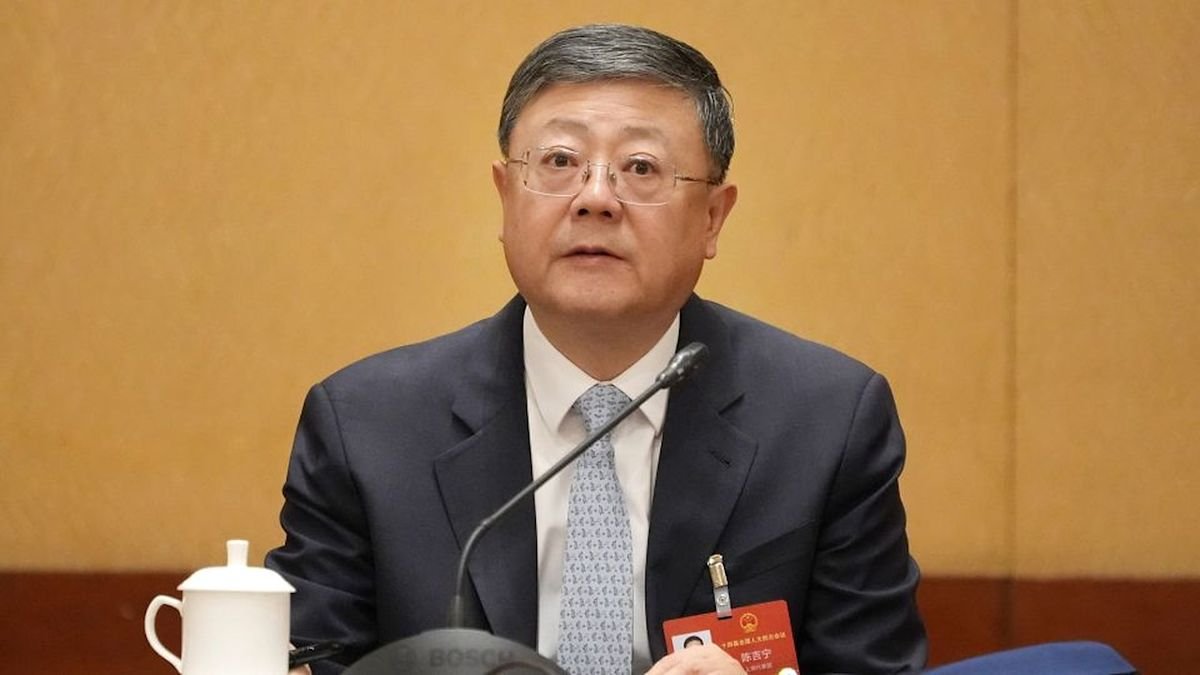
China has launched an investigation into Chen Jining, one of the country’s most prominent political figures and the Communist Party secretary of Shanghai, in a significant development that has intensified questions about President Xi Jinping’s expanding anti-corruption campaign and the future of China’s senior leadership. The announcement, made by the state-run Xinhua news agency on Tuesday, has attracted widespread attention because Chen was widely regarded as a rising political star with the potential to secure an even more influential position within the country’s political establishment.
Chen, 62, is a member of the 24-person Politburo, the Communist Party’s most powerful leadership body outside its seven-member Standing Committee. His investigation makes him the fourth Politburo member to come under investigation or face a political purge since 2025, highlighting the scale of the leadership changes taking place under Xi’s administration.

China’s Central Commission for Discipline Inspection, the country’s principal anti-corruption watchdog, is investigating Chen over what authorities described as suspected serious violations of discipline and law. This terminology is commonly used by Chinese authorities when announcing investigations involving senior officials, particularly in cases associated with alleged corruption.
Although the authorities have not publicly provided detailed information about the specific allegations against Chen, the announcement itself carries considerable political significance. In China’s tightly controlled political system, a public investigation by the central disciplinary authorities involving an official of his standing generally signals a serious threat to that individual’s political future. Such investigations frequently lead to dismissal from senior positions, expulsion from the Communist Party and, in some cases, criminal proceedings.
The development represents another major escalation in President Xi Jinping’s prolonged campaign against corruption within the ruling Communist Party. Since taking power, Xi has repeatedly argued that corruption threatens the party’s credibility, organisational discipline and long-term survival. His administration has consequently pursued investigations involving officials across government departments, provincial administrations, state-owned enterprises, the military and the party’s senior leadership.
The latest investigation is particularly striking because Chen had previously been considered one of the most promising figures in China’s political establishment. His professional background, academic qualifications and rapid rise through government positions distinguished him from many traditional political officials. Analysts had regarded him as a possible candidate for promotion to the Politburo Standing Committee, the country’s highest political decision-making institution.
Before the announcement concerning Chen, three other members of the Politburo formed in 2022 had already been removed from the political establishment or placed under investigation. They were He Weidong, Zhang Youxia and Ma Xingrui. Their cases have raised questions about the stability of the Communist Party’s senior leadership and the extent of Xi’s determination to maintain political and organisational control.
Chen’s professional journey was unusual for a politician of his influence. Unlike many senior Communist Party officials who developed their careers primarily through political administration, he began as an environmental scientist. He earned a doctorate from Imperial College London in the United Kingdom before building an academic career at Tsinghua University, one of China’s most prestigious educational institutions.
His association with Tsinghua University proved particularly important in shaping his professional reputation. He eventually became president of the university, gaining recognition within China’s academic and political circles. His scientific background and administrative experience helped establish his image as a technically qualified leader capable of combining professional expertise with government responsibilities.
Chen entered the Chinese government in 2015 when he was appointed environmental protection minister. His appointment coincided with President Xi’s growing emphasis on environmental protection, pollution reduction and ecological development. At the time, China was facing serious environmental challenges associated with rapid industrialisation, urban expansion and heavy dependence on coal.
Air pollution had become a major public concern in several Chinese cities, while water contamination and environmental degradation were placing additional pressure on policymakers. The government was seeking stronger regulatory measures to address these problems, making environmental protection an increasingly important area of national policy.
Chen’s scientific background appeared to make him a suitable figure for implementing these priorities. His career subsequently advanced, and he became mayor of Beijing before joining the Politburo in 2022. He was later appointed Communist Party secretary of Shanghai, China’s financial and commercial centre.
The Shanghai position is among the most prestigious provincial-level political appointments in China. The city plays a central role in the country’s financial system, international trade, manufacturing, technology industries and foreign investment. Its political leadership therefore carries substantial national influence.
Historically, the Shanghai party secretary position has also served as an important pathway to the highest levels of Chinese politics. President Xi himself served briefly as Shanghai’s Communist Party secretary in 2007 before joining the Politburo Standing Committee. This precedent contributed to expectations that Chen’s appointment could provide him with an opportunity for further advancement.
His sudden investigation has therefore surprised political observers and China specialists. Taisu Zhang, a professor at Yale Law School who specialises in contemporary Chinese law and politics, described the development as one of the most significant political stories to emerge from China in recent years.
Zhang highlighted Chen’s reputation as a rising political figure and noted that he had been considered a strong potential candidate for the Politburo Standing Committee. Such expectations made the investigation particularly unexpected, especially given Chen’s previous professional achievements and his influential position in Shanghai.
The news also generated considerable discussion on Chinese social media. The hashtag concerning Chen’s investigation reportedly accumulated approximately 240 million views on Weibo by Wednesday morning. Many users expressed surprise and disbelief in comments responding to posts published by state media organisations.
The public reaction demonstrated the significance of Chen’s political standing. Although investigations involving senior officials are not unusual in China, the targeting of a figure widely considered a potential future national leader has attracted unusual attention.
President Xi’s anti-corruption campaign has increasingly become one of the defining characteristics of his leadership. The initiative began as an effort to address widespread corruption within the Communist Party and government institutions. Over time, however, it has expanded into a broader programme of political discipline and organisational restructuring.
At a gathering of senior party leaders last month, the Communist Party reaffirmed its commitment to maintaining the campaign without an announced end date. The initiative has affected millions of officials and employees across China’s extensive administrative system, while hundreds of senior figures have faced investigations, disciplinary action or removal from office.
Xi has repeatedly warned party members that corruption could undermine the organisation from within. In January, he declared that no official would receive special treatment because of their position, influence or previous contributions if they engaged in corrupt activities.
The Chinese leader has also promoted what he calls the party’s process of self-revolution, an effort intended to eliminate internal weaknesses and strengthen political discipline. He has urged party members to turn the disciplinary process inward and remove what he describes as harmful elements threatening the organisation’s integrity.
China specialist Jean Christopher Mittelstaedt of the University of Zurich said Chen’s investigation demonstrated that the anti-corruption campaign was not losing momentum. Instead, the latest development suggested that the authorities were continuing to intensify their scrutiny of senior political figures, regardless of their professional achievements or institutional influence.
The investigation has also renewed debate about the relationship between political loyalty, administrative competence and professional expertise in China’s governing system. Chen’s career had represented a model of advancement in which academic qualifications, technical knowledge and administrative experience could lead an individual towards the highest levels of political authority.
Mao Shoulong, a professor of public administration and policy at Renmin University of China, argued in a commentary published on WeChat that Chen’s downfall represented more than the political fate of one individual. He suggested that the case raised broader questions about the model of political advancement that Chen had come to symbolise.
His career had demonstrated how someone from a specialised scientific background could rise through academic and administrative institutions to become one of China’s most powerful political figures. The investigation has therefore prompted questions about how professional competence, political loyalty and internal party discipline interact in determining the future of senior officials.
Following the announcement, Shanghai’s senior Communist Party leadership publicly pledged loyalty to Beijing and expressed support for the need to carry the investigation and related political decisions through to their conclusion. The city’s official newspaper reported the leadership’s position on Wednesday, reflecting the party’s emphasis on maintaining unity and discipline during the unfolding situation.

For China’s political establishment, the investigation represents another reminder that seniority and previous achievements do not guarantee protection from disciplinary scrutiny. For international observers, it provides further insight into the concentration of political authority under Xi Jinping and the continuing transformation of the country’s leadership structure.
However, the full reasons behind the investigation remain unclear. Until the authorities release more information, it will be difficult to determine the precise allegations against Chen or establish whether the case involves corruption alone or broader political considerations.
What is already clear is that the investigation has removed another influential figure from China’s political spotlight and further unsettled expectations about the country’s future leadership. As the anti-corruption campaign continues, the fate of Chen Jining may become an important indicator of how far President Xi is prepared to go in reshaping the Communist Party’s senior ranks and enforcing his vision of political discipline.
Related News:
 Israeli Strike in Southern Lebanon Kills Seven
 Five Years of Taliban Rule Leave Afghanistan in Crisis
 Germany Pledges €1bn Military Aid to Ukraine
 Israel Promotes Film Challenging Controversial Gaza Documentary
 India’s Youth Movement Alleges Mass Detentions Before Protest
 Gaza War Deepens India’s Strategic Ties With Israel
 Delhi Braces for Youth Protests Over Voter Roll Dispute
 PTI Announces Swabi Rally Ahead of Long March Plans
 India’s Voter Roll Crisis Sparks Nationwide Protests
 Gadi Eisenkot: Israel’s Anti-Netanyahu Challenger
 Xi Jinping Tightens China’s Anti-Corruption Campaign
 Ukraine Peace Talks Set to Resume in November
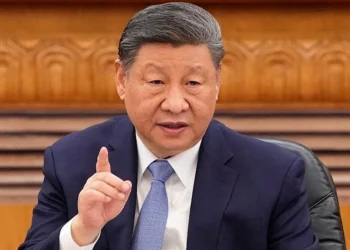 China Expels Record 33 Officials in Xi Jinping Purge
 Bedouin Women Drive Historic Arab Election Gains
 US Pushes for Final Russia-Ukraine Peace Deal
 Knesset Speaker Race Could Decide Netanyahu’s Future
 Ukraine Captures First Indonesian Fighter in Russian Army
 Eisenkot Accuses Netanyahu of Racist Anti-Arab Campaign
 Zelenskyy Warns Starshield Curbs Weaken Ukraine Defences
 Trump, Xi and Putin Face Fears of a New Yalta
 Bangladesh Violence Escalates Ahead of Hasina’s Return
 South Korea Orders Island Residents to Take Shelter
 Malaysia to Deport Thousands to Genocide-Hit Myanmar
 India Blocks Cockroach Movement Leader From UK Flight
 US ‘Narco Boat’ Strikes Draw Global Outcry
 US Awaits Iran Reply on New Ceasefire Proposal
 Hormuz Talks Near Critical Stage
 Maldives Cave Diving Tragedy Raises Safety Alarm
 Discontent grows around Putin amid war strain
 Houthis Strike Saudi Arabia as Middle East Tensions Rise
 Ukraine Villagers Demand Answers After Deadly Arms Depot Strike
 Trump Calls Iran War ‘Small Potatoes’ Despite US Deaths
 Europe’s democracies face a growing far-right threat
 Saudi Arabia Shuts Oil Pipeline After Drone Attack
 Israel Accused of Undermining Palestinian Life
 Yemen War Displaces 125,000 as Fighting Intensifies
 Lib Dems Prepare for Election Amid Reform Challenge
 US Networks Suspend Trump White House Pool Coverage
 Japan PM Backs International Criminal Court
 UK Plans New Centre to Counter Information Warfare
 Xi urges Trump to avoid US-China military conflict
 Lula accuses Trump of seeking control over Brazil
 Nepal PM calls deadly flood a global climate warning
 Republican Senator Questions Trump Ad Spending
 Economic growth and political strain reshape Benin
 Drumcree Talks Falter as Legal Challenge Deepens
 New Maps Reveal Gaza’s Vast Destruction
 Green Party faces dispute over Zionism motion
 Former German Intelligence Chief Arrested Over Espionage
 Israel Marks Three Years Since October 7 Attack
 South Korea Probes Fuel Shipments to Russia
 Trump Says He Deserves Nobel Peace Prize
 Sri Lanka Ex-First Lady Arrested Over Donation Probe
 Houthi Missile Claim Sparks Riyadh Airport Disruption
 Turkey Rules Out Troops in Saudi Arabia’s Houthi Conflict
 Trump Rules Out Iran Attack Before US Elections
 Delhi Tightens Security Ahead of Election Protest
 Trump’s Russian Diesel Deal Sparks Ukraine Fury
 Delhi Detains Protest Leaders as Youth Rally Escalates
 French Students Protest Poor Conditions in Paris Suburbs
 Brazil Court Scandal Threatens Lula as Bolsonaros Rise
 Greta Thunberg Backs French Students in School Protests
 Millions Face Tougher Medicaid Rules From January
 Ukrainian Soldier Faces Trial Over Nord Stream Blast
 Serbia Leader Linked to Controversial Trump Tower Plan
 Zelenskyy Says US Failed to Warn Kyiv of Russian Strikes
 Japan’s Takaichi Faces a Crucial Second Year in Power
 Trump’s Global Policies Put Republicans at Risk
 Novaya Gazeta to Close After Russian Government Pressure
 Global Crises Test Diplomacy as Trump’s Policies Face Scrutiny
 Arab Coalition Sees Historic Chance to Oust Netanyahu
 Australia Reviews UK Visa Rules Amid Worker Influx
 ANC Faces Voter Backlash in South African Elections
 Exiled Journalists Defy Putin’s Growing Media Crackdown
 One Nation Candidate Apologises for Offensive Posts
Zelenskyy Sees Peace Opportunity as US Envoys Meet Putin
 Iran Death Row Boxer Wins Prestigious Human Rights Award
 CEU Eyes Budapest Return as Hungary Enters New Era
 Canada May Turn to Chinese Automakers if US Talks Fail
 Australia’s Election Funding Changes Face Fresh Backlash