A former football teammate has discovered that a childhood friend was killed while fighting for Russia in Ukraine after finding his name among hundreds of thousands of military deaths recorded in leaked government data. The discovery has revealed not only a personal tragedy but also the hidden human cost of Russia’s prolonged invasion of Ukraine and the unequal burden of the conflict across Russian society.
Pjotr Sauer, a journalist who spent part of his childhood in the wealthy western suburbs of Moscow, made the discovery while investigating Russia’s military losses. He and his colleagues had been examining more than 11 million death certificates obtained from Rosstat, Russia’s state statistics agency. Their analysis identified nearly half a million Russian soldiers who had died during the war in Ukraine, providing an unusually detailed picture of the country’s military casualties.
After weeks of analysing the information, Sauer decided to search for names from places associated with his childhood. He had grown up in Rublevka, an affluent area west of Moscow known for its wealthy residents, luxury properties and close connections to Russia’s political and business establishment.

The region has long been associated with the country’s powerful elite. Following the collapse of the Soviet Union, traditional holiday homes belonging to senior Communist officials gradually gave way to enormous private estates owned by wealthy businessmen and political figures. Russian President Vladimir Putin and former president Dmitry Medvedev have also established residences in the area.
Given the region’s wealth, Sauer initially expected to find relatively few military casualties among its residents. Previous analysis had suggested that the burden of the war had fallen disproportionately on poorer parts of Russia, where working-age men faced significantly greater risks of dying in the conflict than those living in Moscow.
In some of Russia’s poorest regions, men of working age were reportedly up to 32 times more likely to die in the war than men of the same age in the capital. Many families in wealthier communities had been able to avoid military mobilisation, while some young men from privileged backgrounds left Russia after the full-scale invasion began in February 2022.
Sauer first searched his childhood village of Zhukovka, but the database returned no results. He then expanded his search to settlements along the Rublyovo-Uspenskoye highway, which connects several wealthy communities west of Moscow.
Eventually, he entered the name of Gorki-10, a settlement located several miles further along the road. One name immediately caught his attention: Yuri Vladimirovich Kyrmyz, a 31-year-old man whom he had known as a teenager.
The records indicated that Kyrmyz had died on 3 February 2025 in Makiivka, within the Svatove district of the Russian-occupied Luhansk region of Ukraine. His recorded cause of death was an explosion during military operations.
The location was particularly significant because Makiivka and surrounding areas had experienced prolonged fighting as Russian forces attempted to regain territory lost during Ukraine’s 2022 counteroffensive. The fighting formed part of the wider military confrontation along the eastern front, where both sides have suffered substantial casualties.
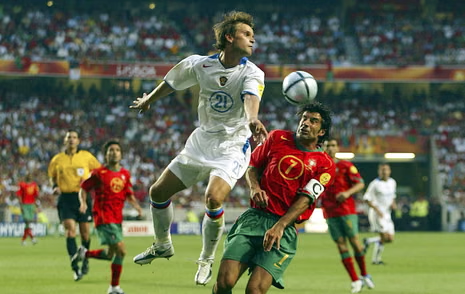
For Sauer, however, the discovery was deeply personal. Around two decades earlier, he and Kyrmyz had regularly played football together as teenagers. Although they were not particularly close friends, Kyrmyz had been a familiar presence during their matches.
Sauer remembered him as a quiet and dependable defender who rarely spoke much but could always be relied upon during games. They eventually lost contact as their lives moved in different directions. Sauer had no knowledge that his former teammate had joined the Russian military, and he was completely unaware that Kyrmyz had died in Ukraine.
The discovery left him confronting an uncomfortable question: what had motivated someone he remembered from his childhood to participate in the invasion?
He acknowledged that he could not know the precise reasons behind Kyrmyz’s decision. However, his family’s financial circumstances and the economic incentives offered by the Russian military may provide some possible context.
Although Rublevka is widely associated with enormous wealth, not everyone living in the area belongs to the elite. Parts of Gorki-10 consist of Soviet-era apartment buildings originally constructed for workers who served wealthy households or worked at the local stud farm, an institution dating back to the 19th century.
Sauer remembered that Kyrmyz’s family had not been particularly well-off. Before joining the military, Kyrmyz worked as a car dealer. For someone from a modest economic background, the financial incentives offered by the Russian armed forces could have been attractive.
Military recruitment payments and salaries in some cases amounted to several times the average annual wage. Such financial rewards could represent an opportunity for people facing limited employment prospects, economic insecurity or financial responsibilities.
However, money may not have been the only motivation. Sauer also considered the influence of Russian historical narratives and national identity, particularly among people who grew up during the post-Soviet period.
Kyrmyz belonged to a generation raised on the memory of the Soviet Union’s victory over Nazi Germany during the Second World War. Victory Day, celebrated on 9 May, remains one of Russia’s most significant national occasions, with enormous cultural and political importance.
Over the past two decades, Putin’s government has increasingly used the historical memory of the Soviet victory to shape national identity and justify contemporary political positions. During the invasion of Ukraine, Russian officials repeatedly invoked the Second World War, portraying the conflict through claims about fighting an alleged Nazi threat.
Such narratives have influenced public discussions about the war and helped shape the political environment in which many Russians have grown up. Nevertheless, the precise influence of these messages on individual recruitment decisions remains difficult to establish.
Sauer’s discovery also reminded him of another person from his footballing past who had joined the invasion: his former coach, Andrei Solomatin.
Solomatin had once enjoyed a successful professional football career. He played for major Moscow clubs CSKA and Lokomotiv, earned 13 appearances for the Russian national team and represented his country at the 2002 FIFA World Cup.
However, his life reportedly became increasingly difficult after retirement. Financial debts, problems with alcohol and declining professional opportunities contributed to his gradual disappearance from public attention.
By the time Sauer encountered him again, Solomatin was earning a modest living coaching a local Sunday league football team. Their team included players from different countries, including the Netherlands, Britain and Nigeria.
Sauer recalled that Solomatin had not previously displayed obvious hostility towards Ukraine or shown much interest in political discussions. However, Russia’s full-scale invasion appeared to change his direction.
In autumn 2022, Solomatin began delivering humanitarian supplies to Española, a far-right military formation associated with Russian football ultras and involved in fighting in occupied Ukrainian territory.
By July 2023, he had joined the formation himself. The former international footballer subsequently returned to television appearances, this time wearing military clothing and publicly expressing his support for Putin.
His transformation demonstrated how the war could reshape the lives and identities of individuals from very different backgrounds. For Solomatin, military involvement appeared to restore a degree of public attention and importance that had gradually disappeared after his sporting career ended.
Kyrmyz’s story, however, remained largely invisible until the leaked records brought his death to light. Unlike prominent military figures or individuals whose deaths receive extensive public attention, many ordinary Russian soldiers leave little publicly accessible information behind.
The investigation has raised wider questions about the transparency of Russia’s military casualty figures and the extent to which ordinary citizens understand the human cost of the conflict.
Although families in some of the worst-affected regions have experienced repeated losses, the overall scale of military deaths remains difficult to establish through publicly acknowledged information.
The Kremlin has continued to reject independent assessments that challenge its presentation of the war. Responding to questions about the newly analysed figures, presidential spokesperson Dmitry Peskov dismissed the findings and insisted that only official information could be trusted.
However, independent Russian journalists highlighted an important contradiction: the records used in the investigation originated from Russia’s own state statistics agency, rather than from an external organisation.
The use of leaked government records has provided researchers with an opportunity to examine military deaths in greater detail than publicly available official statements have allowed. By analysing demographic information, geographical patterns and causes of death, investigators can better understand how the war has affected different sections of Russian society.
For Sauer, the statistics ultimately became much more than an exercise in data analysis. Behind every entry was an individual whose life had ended, leaving families and communities to deal with the consequences.

Among those names was someone he once knew as a quiet teenager playing football on a local pitch. Without access to the leaked information, he believes he might never have discovered what happened to his former teammate.
The story of Yuri Kyrmyz illustrates how a conflict fought thousands of miles from ordinary daily life can reach into familiar communities, changing the destinies of people who once shared friendships, ambitions and ordinary childhood experiences. It also demonstrates that the human cost of war is not always visible through official announcements or battlefield reports.
As Russia’s invasion of Ukraine continues, the personal stories emerging from casualty investigations offer another perspective on the conflict. Beyond military strategies and territorial developments, the war continues to claim lives across generations, leaving many families with unanswered questions and permanent losses
Related News:
 Israeli Strike in Southern Lebanon Kills Seven
 Israel Promotes Film Challenging Controversial Gaza Documentary
 Ukraine Villagers Demand Answers After Deadly Arms Depot Strike
 UN expert urges UK to rethink Israel policy
 Israel Accused of Undermining Palestinian Life
 Latin America women fear rollback of rights
 EU Divisions Deepen Over Israel Policy
 Russia Strikes Kyiv After Agreeing to Resume Peace Talks
 UAE Nominee Faces Backlash Over Sudan War Role
 Malaysia to Deport Thousands to Genocide-Hit Myanmar
 Yemenis Prepare to Flee as Houthis Advance on Aden
 UN Tribunal Questions Evidence Behind Gaza Aid Staff Sacking
 Palestinian Former EU Worker Struggles to Survive
 Cartel crackdown raises fears of fresh violence
 Activists allege abuse after Gaza flotilla seizure
 US ‘Narco Boat’ Strikes Draw Global Outcry
 Trump Announces 3-Day Russia–Ukraine Ceasefire Deal
 New Footage Revives Peter Falconio Mystery
 Ukraine Creates Long-Range Strike Command
 Dreyfus Statue Finally Gets Permanent Paris Home
 Taliban global ties grow as rights fears mount
 Five Years of Taliban Rule Leave Afghanistan in Crisis
 Daughter Finds Bones in Parents’ Burned-Out Car
 Argentina Orders Return of Nazi-Looted Painting
 Miliband Rejects Chief Rabbi’s West Bank Warning
 Royal Crown Branded Enslaved Africans in Britain’s Slave Trade
 Gaza Strike Kills Child and Paramedic
 Saudi Pact Raises Risk of Pakistan Entering War
 Japan PM Backs International Criminal Court
 King Refers Jamaica Slavery Petition to Privy Council
 Ukraine and Russia Escalate Long-Range Drone War
 New Maps Reveal Gaza’s Vast Destruction
 Germany Pledges €1bn Military Aid to Ukraine
 Iran Nobel Laureate Reveals Prison Torture and Fears
 Former German Intelligence Chief Arrested Over Espionage
 Israeli Settlers Assault Palestinian Photographer
 Navi Pillay Wins Nobel Peace Prize for Justice
 Church of England Reparations Fund Faces Growing Backlash
 Zelenskyy Accuses US of Delaying Ukraine Missile Supplies
 Zelenskyy Says US Failed to Warn Kyiv of Russian Strikes
 Ukraine Peace Talks Set to Resume in November
 Serbia’s Student Victory Sparks a ‘Smell of Freedom’
 Trump’s Midterm Campaign Faces Racism and Political Backlash
 King Charles Faces Caribbean Slavery Apology Demands
 Paraguay President Impeached and Arrested After Banking Crisis
 US Pushes for Final Russia-Ukraine Peace Deal
 Orbán’s Brother Detained in Smuggling Probe
 Ukraine Captures First Indonesian Fighter in Russian Army
 Zelenskyy Sees Peace Opportunity as US Envoys Meet Putin
 Iran Death Row Boxer Wins Prestigious Human Rights Award
 US Indictment Reveals New Links in RAF Fairford Case
 Drone Warfare Fuels a Deadly Civilian Crisis in Sudan
Zelenskyy Warns Starshield Curbs Weaken Ukraine Defences
 Bangladesh Violence Escalates Ahead of Hasina’s Return
 Gaza Faces a Toxic Environmental Crisis for Generations
 Wife Appeals for Release of Japanese Journalist Held in Russia
 France Teargas Protests: Thousands Report Bleeding
 Greene Pushes Epstein Files Amid Trump Fallout
 Ben Roberts-Smith Denies War Crime Allegations in First Statement
 Houthis Strike Saudi Arabia as Middle East Tensions Rise
 Trump Calls Iran War ‘Small Potatoes’ Despite US Deaths
 US Networks Suspend Trump White House Pool Coverage
 Democrat Says ICE Restricted Detention Camp Oversight
 Republican Senator Questions Trump Ad Spending
 Yemen government launches offensive against Houthis
 Israel Marks Three Years Since October 7 Attack
 Trump Says He Deserves Nobel Peace Prize
 Trump Rules Out Iran Attack Before US Elections
 Brazil Court Scandal Threatens Lula as Bolsonaros Rise
 India’s Voter Roll Crisis Sparks Nationwide Protests
 Senegal LGBTQ+ Crackdown Drives People Into Hiding
 UK Bill Faces Warning Over Fayed Trafficking Victims
 Xi Jinping Tightens China’s Anti-Corruption Campaign
 Flávio Bolsonaro Reportedly Leaves Brazil After Election Defeat
 Trump’s Global Policies Put Republicans at Risk
 Alan Jones Trial Paused for Melbourne Cup Viewing
 US Treasury Chief Moves to Military Base Over Iran Threat
 Eisenkot Accuses Netanyahu of Racist Anti-Arab Campaign
 India Blocks Cockroach Movement Leader From UK Flight
 Colombia President Joins Supermarket Hostage Crisis