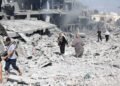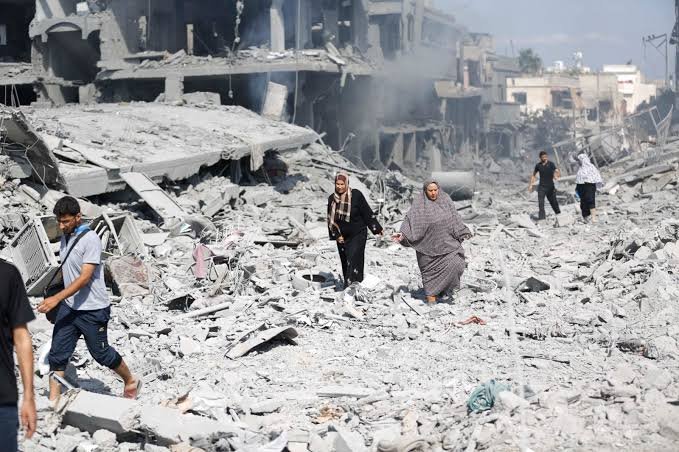
The devastating military assault on Gaza has left behind an environmental catastrophe that could threaten the health, safety and survival of Palestinians for generations, according to a new report by international aid organisation Oxfam and the Conflict and Environment Observatory (Ceobs). The findings warn that widespread contamination of water, soil and air has transformed large parts of the territory into what experts describe as a toxic wasteland, creating serious long-term risks for millions of people.
The report highlights the extensive environmental consequences of Israel’s military operations, including the destruction of residential buildings, sanitation facilities, agricultural land and essential public infrastructure. It identifies heavy metals, explosive residues, asbestos from demolished structures, untreated sewage and other hazardous materials as major sources of contamination. These pollutants are increasingly threatening the natural systems that Palestinians depend on for drinking water, food production, sanitation and basic survival.

According to the organisations, the contamination is not limited to isolated locations but is spread across the Gaza Strip. The scale of destruction, combined with the territory’s high population density and limited access to essential services, means that civilians are being exposed to multiple environmental hazards in their everyday lives. The consequences could continue long after the immediate military destruction has ended.
Oxfam International’s executive director, Amitabh Behar, warned that the environmental destruction accompanying the military assault has fundamentally undermined the conditions necessary for human safety and survival. He described the situation as an environmental catastrophe with potentially devastating consequences for present and future generations.
Behar argued that Palestinians are being exposed to toxic substances through contaminated air, food and drinking water, as well as through direct contact with polluted soil, construction debris and damaged infrastructure. He warned that these dangers would remain for decades unless urgent environmental clean-up, rehabilitation and recovery programmes were prioritised.
The report also raises concerns about the possible consequences under international humanitarian and human rights law. Oxfam maintains that the destruction and contamination of Gaza’s environment raise serious questions about Israel’s legal obligations during armed conflict. The organisation has called for immediate international attention to the environmental consequences of the military campaign rather than allowing the issue to be overlooked during discussions about rebuilding the territory.
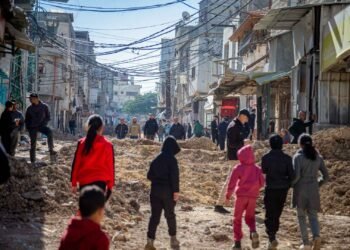
The environmental crisis has become particularly alarming because Gaza’s population has extremely limited opportunities to escape contaminated areas. Years of conflict, displacement and destruction have left large numbers of people living in damaged neighbourhoods, temporary shelters and overcrowded locations. Many families have little choice but to remain close to demolished buildings, accumulated waste and polluted water sources.
The report describes how untreated sewage is flowing into the Mediterranean Sea and leaking into the ground, increasing the likelihood of water contamination and the spread of infectious diseases. The destruction of sanitation facilities and wastewater treatment systems has severely weakened Gaza’s ability to manage human waste safely. As a result, contaminated water and rubbish are creating increasingly dangerous living conditions.
The accumulation of waste is also contributing to the spread of insects, rodents and other disease-carrying pests. In densely populated displacement areas, these conditions could accelerate the transmission of illnesses, particularly where access to clean water, proper sanitation and medical facilities remains severely restricted.
Children, pregnant women, older people and individuals with existing health vulnerabilities are among those facing the greatest risks. Exposure to toxic substances can have serious consequences for human health, depending on the type of pollutant, the duration of exposure and the level of contamination. Children may face additional dangers because their bodies are still developing and they frequently come into direct contact with contaminated soil, dust and debris.
Pregnant women are also particularly vulnerable to certain environmental pollutants, which may affect maternal health and fetal development. Experts warn that without systematic monitoring and effective environmental protection measures, the health consequences could extend beyond the immediate humanitarian emergency.
The scale of physical destruction provides an indication of the challenge facing future recovery efforts. According to estimates from the United Nations Environment Programme (UNEP), Israeli military operations have generated more than 61 million tonnes of debris across Gaza. Destroyed homes, commercial buildings, roads and public infrastructure have created enormous quantities of rubble that may contain hazardous substances.
Much of this debris cannot simply be removed and discarded as ordinary construction waste. Buildings constructed with asbestos-containing materials, industrial chemicals, heavy metals and other potentially dangerous substances require specialised handling. Improper removal or disposal could spread contamination further, exposing workers, displaced families and surrounding communities to additional health risks.
The report’s author, Lama Abdul Samad, a global water and sanitation specialist at Oxfam, said addressing Gaza’s environmental destruction would be an exceptionally difficult undertaking. She explained that contamination is dispersed across urban rubble, agricultural land, water systems and soil, making it challenging to identify and remove every source of pollution.
Another major obstacle is the continued presence of unexploded ordnance. Missiles, bombs and other explosive devices that failed to detonate remain scattered across damaged neighbourhoods and public spaces. These dangerous materials not only threaten civilian lives directly but also prevent environmental specialists and humanitarian workers from safely accessing affected locations.
The presence of explosive residues creates additional environmental concerns. Some military-related contaminants can remain in the environment and enter soil and water systems, potentially affecting agriculture, food production and human health. Without proper investigation, the full extent of the contamination will remain difficult to establish.
Abdul Samad emphasised the urgent need for Israel to allow access for comprehensive environmental assessments on the ground. Such assessments would help specialists identify the most dangerous locations, measure contamination levels and determine which areas require immediate intervention.
She also stressed that recovery would require extensive clearance operations, continuous environmental monitoring and specialised treatment of contaminated areas. Removing hazardous debris, managing explosive residues and addressing heavy metals and organic pollutants will require technical expertise, substantial financial resources and long-term international cooperation.
The findings raise important questions about Gaza’s future reconstruction. Rebuilding houses, hospitals, schools, roads and other essential infrastructure will be an enormous task. However, experts warn that construction activities alone will not restore normal living conditions if the underlying environmental hazards remain unaddressed.
Reconstruction programmes that overlook contamination could unintentionally expose returning residents and construction workers to dangerous substances. New buildings and public facilities could also be developed on land that remains unsafe for residential or agricultural use. For this reason, environmental recovery must be treated as an essential part of the reconstruction process rather than a secondary concern.
Behar warned that rebuilding Gaza without first understanding and addressing the extent of environmental contamination could create serious public health consequences for generations. He called for environmental rehabilitation to proceed alongside reconstruction, ensuring that the territory’s land, water and sanitation systems are made safe for civilian life.
The report comes amid continuing international debate over the humanitarian and legal consequences of Israel’s military campaign. A United Nations independent international commission of inquiry previously concluded that Israel had committed genocide in Gaza and that Israeli officials, including Prime Minister Benjamin Netanyahu, had incited such acts. Israel’s mission in Geneva rejected the commission’s findings, describing them as a libellous sham. Separately, the International Criminal Court has issued an arrest warrant for Netanyahu over alleged war crimes.
According to figures cited in the report, Israel’s military assault has killed more than 74,000 Palestinians and injured at least 175,000, while thousands of people remain unaccounted for beneath the rubble. Beyond the immediate human cost, the environmental findings indicate that the consequences of the destruction could continue affecting communities long after the fighting has stopped.
The situation also highlights the importance of international assistance in protecting public health and supporting environmental recovery. Gaza will need access to specialised equipment, scientific expertise, financial support and international monitoring to assess and address the full scale of the damage. Humanitarian organisations and environmental specialists warn that delays could allow contamination to spread further and make future restoration more complicated and expensive.

Ultimately, Gaza’s recovery will depend not only on rebuilding destroyed infrastructure but also on restoring the environmental conditions necessary for people to live safely. Clean drinking water, uncontaminated soil, functioning sanitation facilities and safe housing are fundamental requirements for a sustainable future.
As international attention increasingly turns towards reconstruction, Oxfam and Ceobs are urging governments and humanitarian organisations to recognise environmental rehabilitation as an urgent priority. Without comprehensive assessment, effective clean-up and long-term monitoring, the toxic legacy of the conflict could remain a serious threat to Palestinian health, livelihoods and survival for decades to come.
The Israeli government has been contacted for comment on the report’s findings.
Related News:
 Gaza Floods Leave Thousands Homeless as Tents Await Entry
 Israeli Strike in Southern Lebanon Kills Seven
 Daughter Finds Bones in Parents’ Burned-Out Car
 Ukraine and Russia Escalate Long-Range Drone War
 Israel Promotes Film Challenging Controversial Gaza Documentary
 China mine blast death toll rises to 90
 Ebola outbreak in DRC overwhelms health system as cases surge
 Maldives Cave Diving Tragedy Raises Safety Alarm
 New Footage Revives Peter Falconio Mystery
 Five Years of Taliban Rule Leave Afghanistan in Crisis
 Nepal-Tibet Flood Death Toll Rises as 2,478 Remain Missing
 Ukraine Villagers Demand Answers After Deadly Arms Depot Strike
 Nepal Flood Survivors Face Unimaginable Loss
 Argentina Orders Return of Nazi-Looted Painting
 Nepal Tunnel Rescue Offers Hope Amid Flood Devastation
 Royal Crown Branded Enslaved Africans in Britain’s Slave Trade
 Israel Accused of Undermining Palestinian Life
 Yemen War Displaces 125,000 as Fighting Intensifies
 Gaza Strike Kills Child and Paramedic
 Japan PM Backs International Criminal Court
 Nepal PM calls deadly flood a global climate warning
 Fayed Survivors Demand Inquiry Into Medical Regulator
 Latin America women fear rollback of rights
 Indonesia Faces Lawsuit Over Escalating Wildfire Haze
 South Sudan Trauma Wards Struggle as Fighting Intensifies
 Senegal LGBTQ+ Crackdown Drives People Into Hiding
 Saudi Arabia Faces Outcry Over Execution of Former Minor
 Zelenskyy Says US Failed to Warn Kyiv of Russian Strikes
 Amnesty Alleges Cambodian Officers Guarded Scam Compounds
 UAE Nominee Faces Backlash Over Sudan War Role
 Ukraine Captures First Indonesian Fighter in Russian Army
 Iran Death Row Boxer Wins Prestigious Human Rights Award
 Indonesia Wildfires Fueled by El Niño and Climate Change
 Drone Warfare Fuels a Deadly Civilian Crisis in Sudan
 Zelenskyy Warns Starshield Curbs Weaken Ukraine Defences
 Bangladesh Violence Escalates Ahead of Hasina’s Return
 Ben Roberts-Smith Denies War Crime Allegations in First Statement
 China Fireworks Factory Blast Kills 21 in Hunan
 US ‘Narco Boat’ Strikes Draw Global Outcry
 Barrister Criticises Trial After Suicide Case Verdict
 Pope Meets Families in Italy Toxic Waste Zone
 Ukraine Creates Long-Range Strike Command
 Powerful 7.7-Magnitude Earthquake Hits Eastern Indonesia
 Survivor Sues Musk’s xAI Over AI Abuse Images
 Harrods Faces Dispute Over Fayed Abuse Compensation
 New Maps Reveal Gaza’s Vast Destruction
 Europe’s Record Heat Summer Signals Climate Risks
 Germany Pledges €1bn Military Aid to Ukraine
 Iran Nobel Laureate Reveals Prison Torture and Fears
 Kenya Confirms First Ebola Case as Patient Dies
 Former German Intelligence Chief Arrested Over Espionage
 WHO Says Russia Plague Epidemic Risk Remains Low
 Okinawa US Troops Face Curfew After Murder Case
 Sri Lanka Ex-First Lady Arrested Over Donation Probe
 Gaza War Deepens India’s Strategic Ties With Israel
 Delhi Tightens Security Ahead of Election Protest
 EU Divisions Deepen Over Israel Policy
 Three Convicted in Mexico Surfing Trip Murders
 Australian Advocates Seek Subsidised Drugs for PMOS
 Mexico Storms Leave Five Dead as Flooding Worsens
 Elizabeth Struhs Inquest Examines Child Safety Failures
 Millions Face Tougher Medicaid Rules From January
 India’s Voter Roll Crisis Sparks Nationwide Protests
 Iranian Woman Faces Death Sentence Over Social Media Post
 Gadi Eisenkot: Israel’s Anti-Netanyahu Challenger
 UK Bill Faces Warning Over Fayed Trafficking Victims
 Magnitude-7 Earthquake Strikes Tibet, Killing at Least 16
 Xi Jinping Tightens China’s Anti-Corruption Campaign
 Ukraine Peace Talks Set to Resume in November
 Melting Dolomites Glaciers Reveal 250 WWI Explosives
 Bedouin Women Drive Historic Arab Election Gains
 Alan Jones Trial Paused for Melbourne Cup Viewing
 Kraków Shooting Suspect Dies After Killing Six
 Knesset Speaker Race Could Decide Netanyahu’s Future
 Teenager Found Alive After Six Days Lost in Australian Bush
 Afghan Women Denied Care as Male Doctors Face Ban
 Eisenkot Accuses Netanyahu of Racist Anti-Arab Campaign
 Trump, Xi and Putin Face Fears of a New Yalta
 Helen Haines Leaves Hospital After Double Amputation