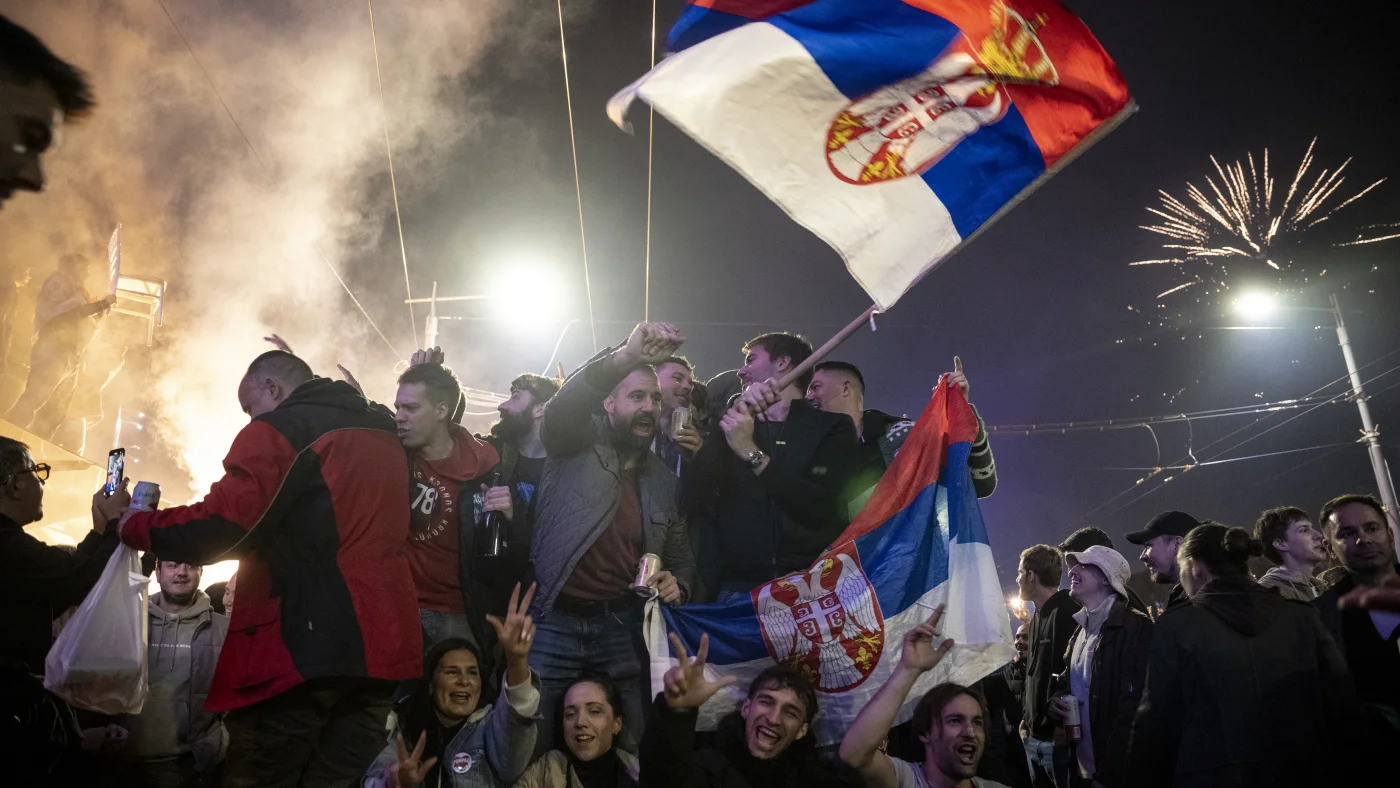
Serbia is entering a significant new political chapter as candidates from the Student List movement prepare to take their seats in parliament following a historic election victory that ended 14 years of rule by populist leader Aleksandar Vučić and his Serbian Progressive Party (SNS). The newly elected representatives, drawn from a broad range of professional and academic backgrounds, are preparing to establish a new government after defeating the political establishment that had dominated the country’s institutions for more than a decade. However, the transition is already facing political tensions, with Vučić refusing to accept his new position in opposition quietly and threatening to organise large-scale protests against the incoming administration.
The 140 elected candidates are scheduled to be sworn in on Tuesday during the inaugural session of Serbia’s new parliament. Their arrival marks a remarkable achievement for a grassroots political movement that emerged from a wider student-led campaign demanding political accountability and institutional reform. The movement’s electoral success in October has attracted considerable international attention, particularly because it demonstrated how a largely outsider political force could challenge an established governing party through organised public mobilisation and electoral participation.

The election result represents a major turning point in Serbian politics. Vučić and his Serbian Progressive Party had maintained political dominance for 14 years, shaping the country’s government and influencing many of its major institutions. Their defeat followed approximately two years of protests and growing public dissatisfaction, creating an opportunity for a new generation of political representatives to enter national leadership.
Although the Student List has secured a parliamentary majority, the formation of a permanent government remains unfinished. The caretaker administration led by outgoing Prime Minister Ðjuro Macut will continue managing government responsibilities until the newly elected parliament approves a replacement cabinet. The identity of the next prime minister and the final composition of the government have not yet been publicly disclosed, leaving important questions about the movement’s immediate political direction.
The Student List is unusual because many of its candidates have little or no experience in professional politics. Its elected representatives include academics, lawyers, scientists and professionals from several other fields, as well as individuals from the cultural sector. Rather than relying exclusively on established politicians, the movement has presented itself as an alternative political platform built around professional expertise, public accountability and cooperation with the student movement that helped bring about its electoral success.
Sarah El Sarag, a human rights lawyer and member of parliament-elect, said the broader student movement remained closely involved in selecting the incoming government. She emphasised that the elected representatives considered themselves accountable to the students whose mobilisation had made their victory possible.
“We are there because of them,” she said, describing the continuing cooperation between the parliamentary candidates and the student organisers. She added that decisions were being made collectively rather than by a small group of politicians operating independently.
This relationship is central to the movement’s political identity. The Student List emerged from a wider campaign in which students played a prominent role in challenging the previous administration. Its leaders have repeatedly suggested that their parliamentary representatives should remain connected to the citizens and activists who supported the movement instead of becoming another conventional political establishment.
However, the lack of previous parliamentary experience among many elected representatives has raised questions about their ability to manage a government and navigate the complexities of national politics. Critics have questioned whether professional expertise in areas such as law, medicine and science can be translated into effective political leadership.
The movement appears determined to address those concerns before taking office. El Sarag explained that parliamentary preparation sessions had been organised almost every day to familiarise candidates with legislative procedures and the responsibilities associated with their new positions.
She said that although many candidates were experienced in their respective professions, entering parliament would represent an entirely new challenge. The preparation programme has therefore included meetings, practical exercises and simulated parliamentary sessions designed to help representatives understand how the legislature operates.
Some participants with previous political experience have also been helping the newly elected members prepare for debates and parliamentary procedures. These exercises are intended to ensure that the representatives can participate effectively from their first day in office.
El Sarag indicated that her colleagues had developed a clearer understanding of what to expect during the inaugural parliamentary session. Nevertheless, she declined to reveal the identity of the candidate expected to become parliamentary speaker or the individual who might eventually become prime minister.
The position of parliamentary speaker is particularly important because the successful candidate will also become Serbia’s acting president under the country’s constitutional arrangements. Consequently, the decision will carry considerable political significance during the transition period.
While the incoming administration prepares to assume responsibility, the outgoing political leadership has begun challenging the legitimacy and conduct of the transition. Vučić has accused the Student List of establishing what he described as a regime of “naked terror”. He has also alleged that prosecutors and police officers are being used to carry out unlawful detentions against individuals connected to his former governing party.
These accusations have emerged as law enforcement authorities investigate several individuals associated with the Serbian Progressive Party. A series of arrests and investigations involving politically connected businesspeople, senior police officers and individuals suspected of electoral misconduct has intensified the confrontation between the outgoing political establishment and the incoming parliamentary majority.
Last week, prosecutors targeted the owners of a prominent construction company over a development project at the former Hotel Jugoslavija site in Belgrade. The hotel was once one of the city’s most recognisable landmarks before suffering damage during the 1999 NATO airstrikes against Serbia. The investigation has attracted attention because of the political and commercial connections surrounding the development.
Authorities have also arrested the owner of Alta Bank, an institution that held the concession for processing bill payments on behalf of Serbia’s state-owned electricity company. Other individuals facing criminal proceedings include senior police officers accused of abusing their official positions and people suspected of involvement in electoral fraud and violence during the election campaign.
The investigations have become an important political issue because the previous administration has accused the new authorities of using state institutions to settle political scores. Supporters of the incoming government, however, argue that investigating alleged corruption and electoral misconduct is necessary to restore public confidence in Serbia’s institutions.
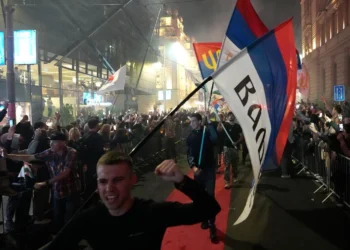
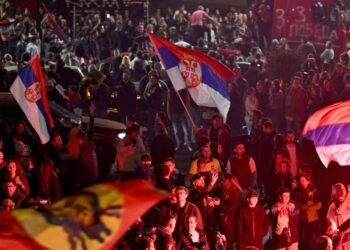
The situation remains particularly sensitive because the Student List’s victory followed a prolonged period of demonstrations and political mobilisation. For approximately two years, student activists and their supporters participated in protests demanding accountability and changes to the country’s political system. The movement eventually transformed that public pressure into electoral success, ending the SNS’s long period in government.
Vučić, meanwhile, appears determined to remain politically active despite losing power. Rather than accepting the transition without resistance, he has indicated that his supporters could organise major demonstrations of their own. Such mobilisation could create additional challenges for the incoming government, particularly during the first weeks of parliamentary proceedings.
Raša Nedeljkov, programme director of the Serbian election and democracy monitoring organisation CRTA, warned that the inaugural parliamentary session could become an early test of the new political balance. He suggested that members of the outgoing governing party might attempt to disrupt proceedings through obstruction, confrontational behaviour or other parliamentary tactics.
Nedeljkov said scenes involving physical obstruction and deliberate disruption would not be surprising given the political atmosphere surrounding the transition. His assessment reflects concerns that the parliamentary process could become another arena for confrontation between the new majority and representatives of the defeated political establishment.
The timing of government formation is also important. Serbia’s elected parliament must approve a new cabinet within 90 days of its inaugural session. Although the constitution provides that period for establishing the government, political observers believe the Student List will be under pressure to appoint a prime minister considerably earlier.
A prolonged transition could create uncertainty over government decision-making and delay important policy initiatives. It could also provide opportunities for political opponents to challenge the incoming administration before it has fully established control over government institutions.
For the Student List, the immediate challenge will be transforming an impressive electoral victory into effective national leadership. The movement must demonstrate that its representatives can manage public administration, oversee the economy, strengthen democratic institutions and address allegations of corruption while maintaining the public support that brought it to power.
The transition will also be closely watched by European governments and international observers. Serbia occupies an important position in southeastern Europe, and its political direction has implications for regional stability, democratic governance and its relationship with the European Union.
The country’s new leadership will therefore face expectations not only from domestic voters but also from international partners seeking greater institutional transparency and political stability. Its ability to maintain unity within a movement composed of people from different professional backgrounds will be equally important.

Serbia’s political transformation remains at an early stage, and the election victory alone does not guarantee a smooth transfer of power. The coming parliamentary sessions, the selection of a prime minister and the response of the outgoing political leadership will determine whether the transition develops peacefully or becomes another period of confrontation.
Nevertheless, the arrival of 140 Student List representatives in parliament represents a historic moment for a movement that began outside traditional political structures. After years of protests and growing demands for accountability, Serbia is preparing to place a new group of political outsiders at the centre of national decision-making. Whether they can translate that public mandate into lasting democratic and institutional reforms will be one of the most important tests facing the country’s new political generation.
Related News:
 Global order shifts amid Trump-era turmoil
 Putin Declares Russia Victory at Scaled Victory Day Parade
 Zelenskyy warns over Oreshnik threat as Kyiv hit
 Former ICC prosecutor condemns US sanctions
 Russian Missiles Intensify Pressure on Kyiv
 Ukraine’s New FP-7 Missile Makes Combat Debut
 Trump Slams Ukraine Strikes as Russia Ceasefire Collapses
 Ukraine Missile Strike Cripples Key Crimea Bridge
 Iran unrest slows under brutal crackdown and global tensions
 Thousands Protest ICE Operations in Nationwide US Day of Action
 Epstein Files Reveal Trump Officials’ Emails with Financier
 Thousands Protest ICE in New York Against Trump Deportation Campaign
 Yvette Cooper: UK Must Follow Principles, Not US Pressure
 Italian Town Buys Mussolini Villa to Keep Away Fascist Fans
 Hungary election: Orbán faces biggest test amid scandal
 US Calls Australia Media Law “Foreign Extortion”
 Oil Prices Surge Above $120 Amid Iran Blockade Fears
 Trump orders US troop pullout from Germany
 Activists allege abuse after Gaza flotilla seizure
 Ukraine strikes Tuapse as oil disaster worsens
 Australia pushes Pacific security pact amid China tension
 Tensions Emerge in Netanyahu-Trump Alliance
 France Faces Record Presidential Crowded Race Amid Far-Right Surge
 Norway Doubles Down on Oil and Gas for Europe Energy Security
 Discontent grows around Putin amid war strain
 Deadly Russian Air Raids Strike Across Ukraine
 Le Pen to Run for President Despite Embezzlement Conviction
 Houthis Strike Saudi Arabia as Middle East Tensions Rise
 Trump Calls Strait of Hormuz ‘American Territory’
 Former Diplomats Urge UK and France to Act on Palestine
 Ukraine Villagers Demand Answers After Deadly Arms Depot Strike
 Trump Hardens Canada Trade Stance as Talks Stall
 Bayeux Tapestry Revives Franco-British Ties
 AfD election surge leaves Magdeburg residents deeply uneasy
 Europe’s democracies face a growing far-right threat
 Sweden Election Hangs on Far-Right Breakthrough
 Nearly 50,000 Flee as Houthis Advance in Yemen
 Elif Eralp Emerges as Berlin’s Next Political Force
 Madrid Tent Camp Grows as Spain Housing Crisis Deepens
 South Korea-Ukraine Row Erupts Over North Korean POWs
 French Student Protests Escalate Into Violent Clashes
 Pilot and Passengers Help Save Flydubai Flight
 French School Protests Escalate as 400 Schools Close
 Bosnia’s Young People Look Beyond Election Hope
 Germany Pledges €1bn Military Aid to Ukraine
 EU Waits for UK Plan as Relations Reset Begins
 Ukraine claims strikes have crippled Russia’s oil refining
 Argentina Protesters Resist Milei’s Land Sale Drive
 Former German Intelligence Chief Arrested Over Espionage
 France Schools Protests Draw 250,000 as Police Clash
 Israeli Settlers Assault Palestinian Photographer
 EU-China Talks Target Surge in Hybrid Car Imports
 UK Mission in East Jerusalem to Remain Open
 French Student Protests Grow Despite Government Pledge
 EU Divisions Deepen Over Israel Policy
 French Students Protest Poor Conditions in Paris Suburbs
 Glucksmann Urges French Left to Fight Far Right
 Greta Thunberg Backs French Students in School Protests
 Ukrainian Soldier Faces Trial Over Nord Stream Blast
 Serbia Leader Linked to Controversial Trump Tower Plan
 Macron Condemns Violence as France Faces 2,400 Arrests
 Milan Luxury Stores Shut as Italy Plans Troop Deployment
 Japan’s Takaichi Faces a Crucial Second Year in Power
 Massive Student-Led Movement Marches in Belgrade Ahead of Serbian Vote
 Spain Deepfake Ad Sparks Election Outrage
 Ukraine Peace Talks Set to Resume in November
 Serbia’s Student Victory Sparks a ‘Smell of Freedom’
 Palestinian Parties Gain Power in Israel’s Election
 Gulf States Push Multi-Part Deal to Avert US-Iran War
 Spain Mourns 68 Dead After High-Speed Train Crash
 Novaya Gazeta to Close After Russian Government Pressure
 Riot Police Deployed as Poland Court Row Escalates
 Canada Joins Boycott of Russian Ice Hockey Teams
 German Politician Hubert Aiwanger Found Dead in Berlin
 France Braces for Nationwide Strike and Mass Protests
 Zelenskyy Sees Peace Opportunity as US Envoys Meet Putin
 Ilse Aigner Set to Make German History as First Female President
 CEU Eyes Budapest Return as Hungary Enters New Era
 Spain Election Could Bring Far Right Back to Government
 Burnham Says Brexit Has Weakened Britain’s Global Standing