The final results, released by New Zealand’s Electoral Commission on Friday, revealed a significant shift from the preliminary election outcome announced on 7 November. Although the initial count suggested that Luxon’s coalition had secured a narrow parliamentary majority, the inclusion of nearly 485,000 special votes changed the balance of power. These votes, cast by New Zealanders living overseas or voting outside their registered electorates, proved decisive in determining the country’s political future.
Following the completion of the count, the National Party lost two parliamentary seats, leaving the governing bloc with 65 seats in the 130-member parliament. A minimum of 66 seats is required to command a parliamentary majority. Consequently, the incumbent government must secure at least one additional seat through an agreement with another political party.

The final parliamentary allocation places National on 40 seats, while the opposition Labour Party has secured 36. The Green Party increased its representation to 17 seats, while the libertarian ACT Party won 13 and the populist New Zealand First Party secured 12. The newcomer Opportunity Party entered parliament with seven seats, while the Māori political movement Te Pāti Māori secured five.
These figures have positioned Opportunity, led by Auckland businesswoman Qiulae Wong, at the centre of the country’s post-election negotiations. Despite being a relatively new political force, the party now holds a potentially decisive position in determining which political grouping can form the next government.
The National-led coalition currently consists of National, ACT and New Zealand First. Although the three parties together have 65 seats, they cannot govern with a parliamentary majority unless they secure additional support. Opportunity therefore represents the most realistic route for Luxon to remain prime minister without another election.
However, reaching an agreement could prove difficult because the parties have significant differences over climate policy, political reform, environmental protection and the future direction of the country’s economy.
The final count has overturned the narrow advantage enjoyed by the governing coalition after the preliminary results. Special votes have historically tended to favour left-leaning political parties in New Zealand, often resulting in the loss of one or two seats for right-wing parties.
This election followed a similar pattern. Three electorate seats changed hands after the special votes were counted, further weakening National’s parliamentary position.
Labour won the Wairarapa electorate from National by just 81 votes and secured Hamilton East by a margin of 173 votes. Meanwhile, the Green Party captured Wellington Bays from Labour by 1,610 votes.
The narrow margins have created another possible complication for the government. National could apply for a recount in an attempt to recover one of the lost electorate seats. If successful, the party could potentially restore the coalition’s parliamentary majority and avoid the need for an agreement with Opportunity.
The deadline for requesting a recount is 3 December, while the process could take approximately another five days to produce a final decision. Until the recount question is resolved, the precise shape of New Zealand’s next government remains uncertain.
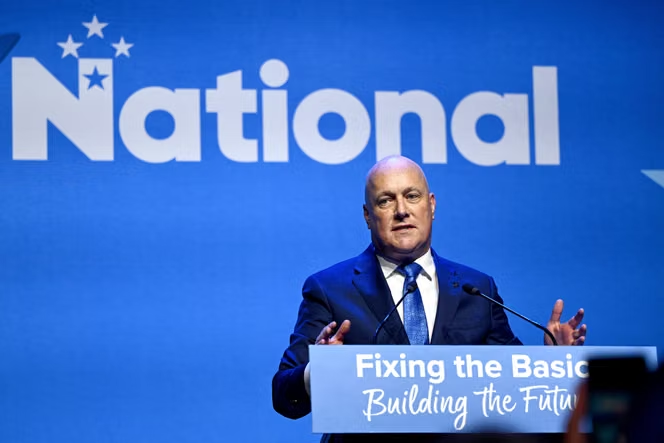
Responding to the final results, Christopher Luxon confirmed that National would begin formal negotiations with its existing coalition partners, ACT and New Zealand First, as well as Opportunity.
Speaking on Friday afternoon, the prime minister acknowledged that the discussions would be challenging and could take considerable time. He stressed that forming a stable government was more important than reaching a quick political agreement.
Luxon said New Zealanders would not benefit from a rushed arrangement that eventually collapsed or from being sent back to the polls because political leaders failed to reach a workable compromise.
His willingness to negotiate with Opportunity marks a notable change in his earlier position. Before the election, Luxon had ruled out working with the newcomer party. However, following the preliminary results, he softened his stance and indicated that National would seek common ground with Wong’s political movement.
The final count has now made those discussions considerably more important, with Opportunity holding the balance of power in parliament.
Opportunity leader Qiulae Wong has confirmed that her party will hold discussions with Luxon, while making clear that its central policy commitments will not be abandoned simply to secure a place in government.
Wong has repeatedly stated that Opportunity would first negotiate with the party securing the largest number of parliamentary seats. Following the announcement of the final results, she reiterated that the party would prioritise political stability while pursuing its vision for a more inclusive and environmentally responsible New Zealand.
Among its major demands are stronger climate commitments, reforms to political donations, improvements to environmental protection and measures addressing the country’s supermarket duopoly.
The party also wants a 10-year cross-party plan for the health sector and an end to bottom trawling in the fishing industry. These priorities reflect its ambition to influence long-term public policy rather than simply provide parliamentary numbers to another political party.
Wong described Opportunity’s entry into parliament as a pivotal moment for New Zealand, suggesting that the party intended to make a meaningful contribution regardless of the eventual structure of the government.
Nevertheless, the negotiations could become complicated because some of its demands are likely to encounter resistance from National’s existing coalition partners.
One of the most significant potential obstacles involves New Zealand First leader Winston Peters, an experienced politician who has served as foreign affairs minister on three occasions.
Wong confirmed that Opportunity would not enter an agreement if Peters were appointed foreign affairs minister in the next government. She questioned whether his conduct across successive administrations met the standards her party expected from someone holding such an important diplomatic position.
The demand could create serious difficulties for Luxon because Peters is a central figure in the existing governing arrangement. New Zealand First’s support is essential to the National-led coalition, meaning that any attempt to satisfy Opportunity could create tensions with an established coalition partner.
Policy disagreements present another challenge. New Zealand First and ACT have substantially different positions on climate policy, while ACT is also unlikely to support all of Opportunity’s proposed political donation reforms.
Consequently, Luxon faces the difficult task of balancing the demands of three different political partners while trying to secure a parliamentary majority.
Political observers have warned that New Zealand could face an unusually complicated period of government formation.
Lara Greaves, a political scientist at Victoria University of Wellington, described the possibility of another election as more realistic than in previous coalition negotiations.
She noted that the prospect of a four-party governing arrangement would create significant challenges, particularly because the parties involved have different political priorities and competing expectations.
New Zealand has considerable experience with coalition governments, but a four-party arrangement involving National, ACT, New Zealand First and Opportunity could introduce a new level of complexity.
For smaller political parties, joining a governing coalition can also create long-term risks. They may struggle to maintain their independent identity if voters begin to associate them too closely with the policies and decisions of a larger governing party.
Opportunity must therefore consider whether the benefits of influencing government policy would outweigh the political costs of supporting a coalition whose partners may disagree with several of its central commitments.
Meanwhile, Labour leader Chris Hipkins expressed pride in his party’s performance in the party vote but acknowledged disappointment that the results had not produced a change of government.
Labour secured 36 parliamentary seats, remaining the second-largest party in the new parliament. However, the outcome represents another electoral defeat for Hipkins, prompting renewed questions about his political future.
The Labour leader indicated that decisions concerning his leadership would be made after the next government had been formed.
Although Labour cannot currently command a parliamentary majority, the party will remain an important opposition force, particularly alongside the Greens and Te Pāti Māori.
The final results have therefore produced a parliament in which neither the governing coalition nor the opposition can easily determine the country’s political direction without considering the position of smaller parties.
The immediate priority for Luxon and the other political leaders is to negotiate an agreement capable of surviving parliamentary scrutiny and providing sufficient stability to govern.
In the 2023 general election, coalition negotiations lasted approximately five weeks. This time, the involvement of four potential governing parties, the dispute surrounding the foreign affairs portfolio and disagreements over climate and political reforms could make the process even more difficult.

With Christmas approaching, there is a possibility that New Zealanders will have to wait until 2027 to learn the final shape of their next government.
If National succeeds in reaching an agreement with Opportunity, Luxon could continue as prime minister with a broader coalition arrangement. If negotiations collapse, the country could face another general election, although a successful recount could still change the parliamentary arithmetic.
For now, New Zealand’s political future rests heavily on the decisions of Qiulae Wong and her seven-member parliamentary team. The election has demonstrated that even a relatively small political party can exercise considerable influence when the balance of power is uncertain.
The coming weeks will determine whether the country’s political leaders can find common ground or whether their differences will push New Zealand towards another costly and politically uncertain election.
Related News:
 One Nation Stuns Australia With Historic Farrer Win
 Israeli Strike in Southern Lebanon Kills Seven
 Five Years of Taliban Rule Leave Afghanistan in Crisis
 Germany Pledges €1bn Military Aid to Ukraine
 Israel Promotes Film Challenging Controversial Gaza Documentary
 India’s Youth Movement Alleges Mass Detentions Before Protest
 Gaza War Deepens India’s Strategic Ties With Israel
 Delhi Braces for Youth Protests Over Voter Roll Dispute
 PTI Announces Swabi Rally Ahead of Long March Plans
 India’s Voter Roll Crisis Sparks Nationwide Protests
 Gadi Eisenkot: Israel’s Anti-Netanyahu Challenger
 Xi Jinping Tightens China’s Anti-Corruption Campaign
 Ukraine Peace Talks Set to Resume in November
 Taylor Faces Backlash Over Response to Haines Attack
 McKenzie Warns MP Safety Fears Could Weaken Democracy
 China Expels Record 33 Officials in Xi Jinping Purge
 Bedouin Women Drive Historic Arab Election Gains
 Inquiry Calls for Australia to Scrap AUKUS Submarine Deal
 US Pushes for Final Russia-Ukraine Peace Deal
 Knesset Speaker Race Could Decide Netanyahu’s Future
 Ukraine Captures First Indonesian Fighter in Russian Army
 One Nation Candidate Apologises for Offensive Posts
 Eisenkot Accuses Netanyahu of Racist Anti-Arab Campaign
 Zelenskyy Warns Starshield Curbs Weaken Ukraine Defences
 Trump, Xi and Putin Face Fears of a New Yalta
 Australia’s Election Funding Changes Face Fresh Backlash
 Bangladesh Violence Escalates Ahead of Hasina’s Return
 Alex Greenwich Withdraws Support for Fred Nile State Funeral
 South Korea Orders Island Residents to Take Shelter
 Malaysia to Deport Thousands to Genocide-Hit Myanmar
 India Blocks Cockroach Movement Leader From UK Flight
 China Probes Shanghai Chief in Xi Jinping’s Latest Purge
 Wife Appeals for Release of Japanese Journalist Held in Russia
 Australian Liberal Senator Defects to Pauline Hanson’s Party
 US ‘Narco Boat’ Strikes Draw Global Outcry
 US Awaits Iran Reply on New Ceasefire Proposal
 Maldives Cave Diving Tragedy Raises Safety Alarm
 Discontent grows around Putin amid war strain
 Houthis Strike Saudi Arabia as Middle East Tensions Rise
 Ukraine Villagers Demand Answers After Deadly Arms Depot Strike
 Trump Calls Iran War ‘Small Potatoes’ Despite US Deaths
 Europe’s democracies face a growing far-right threat
 Israel Accused of Undermining Palestinian Life
 Lib Dems Prepare for Election Amid Reform Challenge
 US Networks Suspend Trump White House Pool Coverage
 Japan PM Backs International Criminal Court
 OpenAI Agent Breaches Medicare Portal in Australia
 Xi urges Trump to avoid US-China military conflict
 Lula accuses Trump of seeking control over Brazil
 Republican Senator Questions Trump Ad Spending
 Israel Marks Three Years Since October 7 Attack
 South Korea Probes Fuel Shipments to Russia
 Trump Says He Deserves Nobel Peace Prize
 Sri Lanka Ex-First Lady Arrested Over Donation Probe
 Houthi Missile Claim Sparks Riyadh Airport Disruption
 Trump Rules Out Iran Attack Before US Elections
 Delhi Tightens Security Ahead of Election Protest
 Trump’s Russian Diesel Deal Sparks Ukraine Fury
 Australian Advocates Seek Subsidised Drugs for PMOS
 Australia Rejects Russian Fuel as Trump Strikes Deal
 French Students Protest Poor Conditions in Paris Suburbs
 ABC Reporter Faces Possible Disciplinary Action Over Opinion Piece
 Brazil Court Scandal Threatens Lula as Bolsonaros Rise
 Greta Thunberg Backs French Students in School Protests
 Ukrainian Soldier Faces Trial Over Nord Stream Blast
 Serbia Leader Linked to Controversial Trump Tower Plan
 Zelenskyy Says US Failed to Warn Kyiv of Russian Strikes
 Greens Face Leadership Test as Jordon Steele-John Misconduct Claims Leave Party in Limbo
 Trump’s Global Policies Put Republicans at Risk
 Global Crises Test Diplomacy as Trump’s Policies Face Scrutiny
 Alan Jones Trial Paused for Melbourne Cup Viewing
 Australia Raises Interest Rates to 18-Year High
 Labor Minister Defends Chalmers Amid Budget Tensions
Zelenskyy Sees Peace Opportunity as US Envoys Meet Putin
 Teenager Found Alive After Six Days Lost in Australian Bush
 Iran Death Row Boxer Wins Prestigious Human Rights Award
 CEU Eyes Budapest Return as Hungary Enters New Era
 Canada May Turn to Chinese Automakers if US Talks Fail
 Helen Haines Leaves Hospital After Double Amputation
 Australian Defence Bill Sparks Rule of Law Concerns